
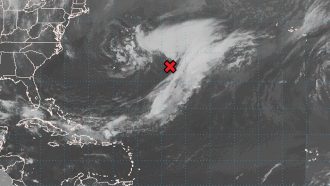
The record-breaking 2020 Atlantic hurricane season is a tough act to follow. But U.S. Atlantic coast residents shouldn’t let their guard down — 2021 will still be an active year for storms, the U.S. National Oceanic and Atmospheric Administration said in a May 20 press conference.
NOAA’s forecast for the Atlantic hurricane season, which lasts from June 1 through November 30, predicts 13 to 20 named storms, with six to 10 of those developing into hurricanes, and three to five into major hurricanes of Category 3 or higher. By comparison, 2020 racked up 31 tropical and sub-tropical cyclones (SN: 11/10/20).
An average Atlantic hurricane season is also busier than it used to be, NOAA announced in April. The new “normal” is now based on averages from 1991 to 2020 rather than 1981 to 2010. Instead of 12 named storms and six hurricanes, an average season now has 14 named storms and seven hurricanes.
Most of the climate conditions that fostered 2020’s busy season continue into 2021: very warm waters in the Atlantic Ocean and Caribbean Sea, weaker trade winds across the Atlantic and a strong West African monsoon. The notable exception is that 2020 was a La Niña year, a phase of the El Niño Southern Oscillation weather pattern that can juice up Atlantic hurricane seasons (SN: 8/21/19). There’s no La Niña so far in 2021, although it could return later in the year.
 Science to restore speech is moving fast. Here’s what’s next
 Toxic secrets are hiding in Arctic ice
 Fossil fuel emissions are down in 2026. Green energy isn’t the reason
 Drugs like Ozempic may help reverse chronic kidney disease
 A high-fiber diet may clear away plastic in the gut
 This may be the best evidence yet that dinosaur blood can fossilize
 Climate crisis could push 141 million more women into extreme poverty
 Sudan war: First suicide bombers, now long-range drone strikes are the norm
 When deaths go uncounted: WHO flags dangerous blind spots in Africa’s health data
 Security Council LIVE: South Sudan’s first elections loom amid rising violence