
 Why kitchen sponges are the perfect home for bacteria
Ask bacteria where they’d like to live, and they’ll answer: a kitchen sponge, please. Sponges are microbe paradises, capable of housing 54 billion bacteria...
SCIENTIFIC NEWS
 A UN report shows climate change’s escalating toll on people and nature
Neither adaptation by humankind nor mitigation alone is enough to reduce the risk from climate impacts, hundreds of the world’s scientists say. Nothing less...
 One forensic scientist is scraping bones for clues to time of death
In a quiet laboratory beyond the decomposing remains on a body farm in Huntsville, Texas, Noemi Procopio works carefully with her drill. With each...
 A new gravity sensor used atoms’ weird quantum behavior to peer underground
The best way to find buried treasure may be with a quantum gravity sensor. In these devices, free-falling atoms reveal subtle variations in Earth’s...
 50 years ago, freezing sperm faced scientific skepticism
The uncertainty of banking sperm – Science News, February 26, 1972 Many men contemplating vasectomies have been depositing a quantity of their semen with...
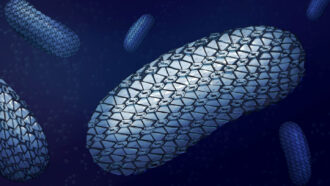 A chain mail–like armor may shield C. difficile from some antibiotics
Chain mail–like armor may help keep one superbug safe from bacteria-killing medicines. Clostridioides difficile bacteria are notorious for taking over the guts of people...
 More than 5 million children have lost a parent or caregiver to COVID-19
An estimated 5.2 million children worldwide have lost a parent or caregiver to COVID-19. The tally covers the beginning of the pandemic through October...
 The COVID-19 pandemic is not an on-off switch
During the winter surge of COVID-19, it felt like the coronavirus was everywhere. Colder weather pushed people inside where the virus can linger in...
 Now that computers connect us all, for better and worse, what’s next?
This article was written, edited and designed on laptop computers. Such foldable, transportable devices would have astounded computer scientists just a few decades ago,...
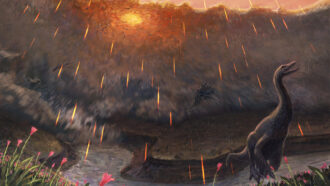 The Age of Dinosaurs may have ended in springtime
About 66 million years ago, a 10-kilometer-wide asteroid slammed into Earth and not long afterward, all nonbird dinosaurs, as well as many other species...
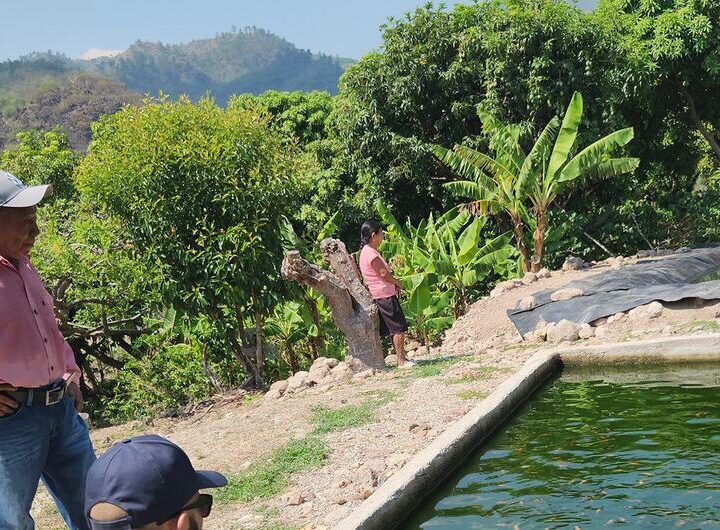 When the rains fail: Preparing for drought in Central America
 ‘Here, you can eat until you’re full’: Oleshky evacuees savour first proper meals in years
 COP31: National Oil Companies Must Lead Global Shift Away from Fossil Fuels, Says NRGI Expert
 COP31: Climate finance falls short as calls grow for polluters to pay