

WASHINGTON: The US Centers for Disease Control and Prevention (CDC) on Saturday said it was monitoring reports of allergic reactions to the COVID-19 vaccination and made recommendations on how people with histories of allergies should proceed.
Anyone who had a severe reaction to a COVID-19 vaccine should not get the second dose, the agency said, defining severe as needing the medication epinephrine or treatment in a hospital.
People who have had a severe allergic reaction to any ingredient in a COVID-19 vaccine should avoid the vaccine formulation containing the ingredient, CDC said. Two vaccines have been approved in the United States under emergency use authorizations.
Individuals with histories of severe allergic reaction to vaccines should consult their doctors about the COVID-19 shot. The CDC said people with severe allergies to food, pets, latex or environmental conditions as well as people with allergies to oral medication or a family history of severe allergic reactions could still get vaccinated.
The US Food and Drug Administration is investigating around five allergic reactions that happened after people were administered Pfizer Inc. and BioNTech SE’s COVID-19 vaccine in the United States this week.
On Friday, the FDA said that the Moderna Inc. vaccine, which received emergency use authorization, should not be given to individuals with a known history of a severe allergic reaction to any components of the shot.
Britain’s medical regulator has said that anyone with a history of anaphylaxis, or severe allergic reactions to a medicine or food, should not be given the Pfizer-BioNTech COVID-19 vaccine.
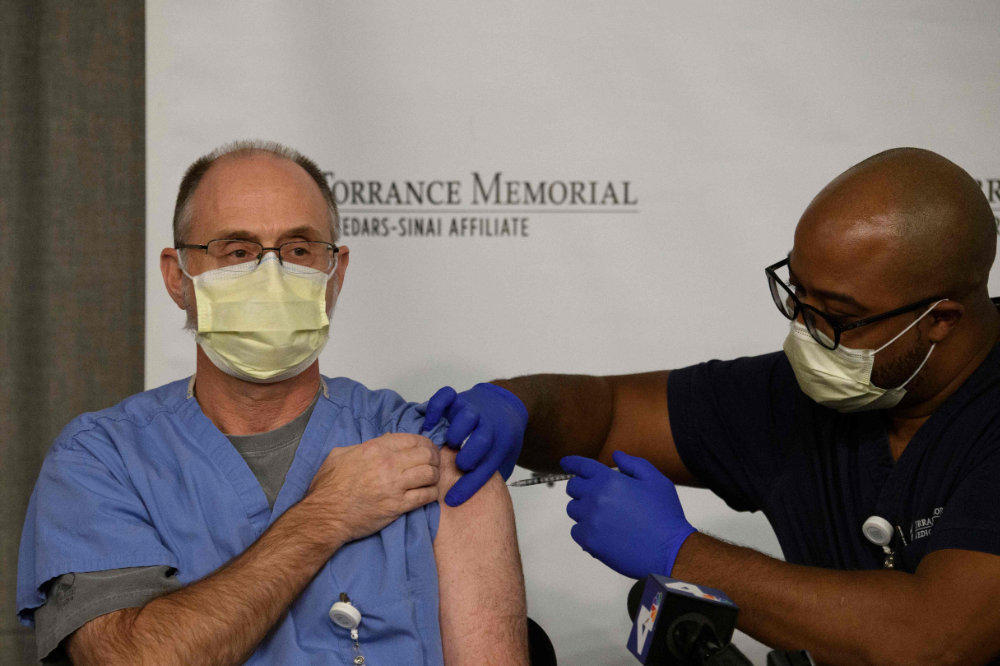
Moderna COVID-19 vaccine begins rollout as US races to broaden injection campaignWe can stop COVID-19: Moderna vaccine success gives world more hope
 In National Geographic’s “Expedition: Saving Our Seas,” it’s all hands on deck
 The ‘hell chicken’ dinosaur was a real terror — to fruit
 The brain’s fear center moonlights as the save button for memories
 Europe’s Hera mission is ready to double down on asteroid science
 Stone Age children left fingerprints on ancient art projects
 This magic mushroom can kill
 When the rains fail: Preparing for drought in Central America
 ‘Here, you can eat until you’re full’: Oleshky evacuees savour first proper meals in years
 COP31: National Oil Companies Must Lead Global Shift Away from Fossil Fuels, Says NRGI Expert
 COP31: Climate finance falls short as calls grow for polluters to pay