
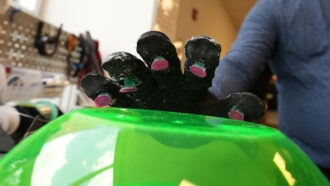
A new high-tech glove totally sucks — and that’s a good thing.
Each fingertip is outfitted with a sucker inspired by those on octopus arms. These suckers allow people to grab slippery, underwater objects without squeezing too tightly, researchers report July 13 in Science Advances.
“Being able to grasp things underwater could be good for search and rescue, it could be good for archaeology, [and] could be good for marine biology,” says mechanical engineer Michael Bartlett of Virginia Tech in Blacksburg.
Each sucker on the glove is a raspberry-sized rubber cone capped with a thin, stretchy rubber sheet. Vacuuming the air out of a sucker pulls its cap into a concave shape that sticks to surfaces like a suction cup. Pumping air back into the sucker inflates its cap, causing it to pop off surfaces. Each finger is also equipped with a Tic Tac–sized sensor that detects nearby surfaces. When the sensor comes within some preset distance of any object, it switches the sucker on that finger to sticky mode.
Bartlett and colleagues used the glove to pick up objects underwater, including a toy car, plastic spoon and metal bowl. Each sucker could lift about one kilogram in open air — and could lift more underwater, with the help of buoyancy, Bartlett says. Adding more suckers could give the glove an even stronger grip.
The octopus-inspired suckers on a new wetsuit glove can pick up objects of various shapes and materials, from a metal toy car to a delicate, squishy hydrogel bead. Sensors on the glove activate suction at its fingertips whenever it approaches an object, allowing wearers to pick items up without even closing their hands.
The octopus-inspired glove barely brushes the surface of what octopuses and other cephalopods can do. Octopuses can individually control thousands of suckers across their eight arms to feel around the seafloor and snatch prey. The suckers do this using not only tactile sensors, but also chemical-detecting cells that “taste” their surroundings (SN: 10/29/20).
The new glove is far from turning fingers into extra tongues. But Bartlett is intrigued by the possibility of adding chemical sensors so that the suckers stick to only certain materials.
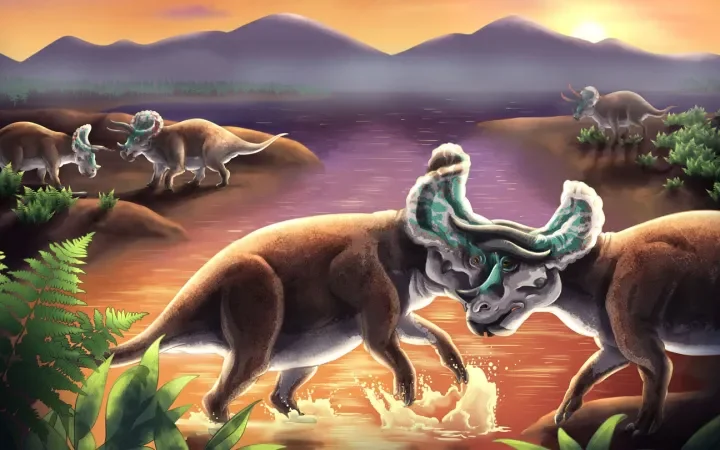 Horned dinosaurs’ weapons evolved to handle the forces of combat
 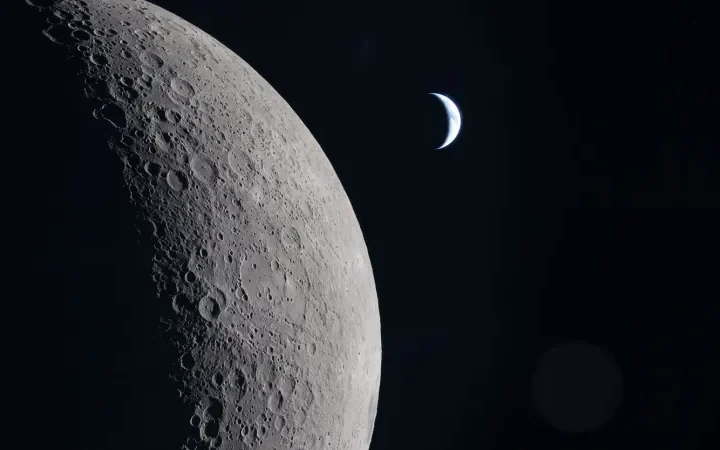 Artemis II results show how much science people can do at the moon
  Crossword: Time lines
  Many American diets may not include enough of this essential nutrient
 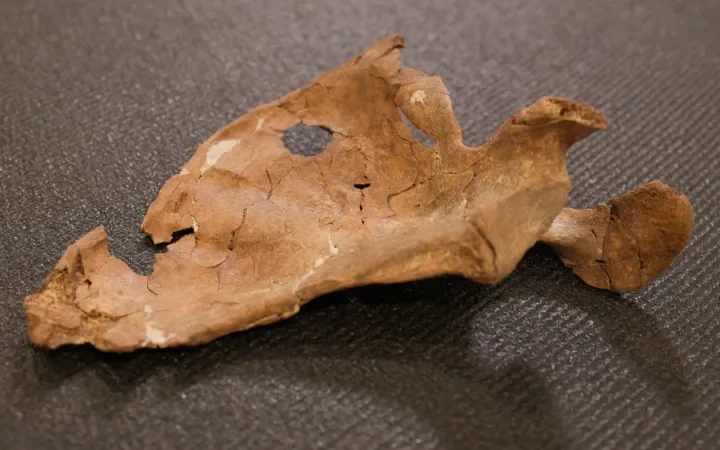 A telling hole in a Neandertal bone hints at a bitter end
  Brain implants are helping people who’ve lost their voice
  WHO scales up Ebola readiness in 22 countries across three continents
  Ukraine: Civilian casualty rates among ‘deadliest’ in years, as energy attacks intensify
  As disasters mount, next UN climate summit faces a test of trust
  Gaza: 340 children killed despite ceasefire agreement – UNICEF