
Sea life’s chemical senses
Science News, September 18, 1971
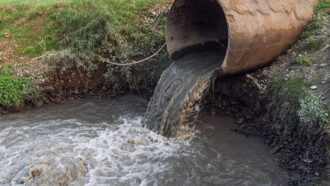
For fish and other underwater life, a sensitivity to chemicals plays the same role as the sense of smell does for land animals.… [Researchers] have been studying the subtle ways this delicate fish-communication system can be disrupted by pollutants…. One study examined the effects of kerosene pollution on the behavior of lobsters…. The experiments demonstrate that chemical communication interference takes place at extremely low dilutions.
Update
Chemical pollution — from sewage and agricultural runoff to pharmaceutical waste — muddles aquatic animals’ senses with potentially dire effects, decades of research has shown. A chemical used to treat sewage seems to limit some fish species’ abilities to form schools, making the fish vulnerable to predators (SN: 10/27/07, p. 262). Drug-tainted waters can have a variety of effects on fish, including suppressing their appetites (SN: 12/20/08, p. 15). A plastic chemical also appears to confuse senses: Its scent can lure sea turtles into eating plastic debris (SN: 3/28/20, p. 14).
 These tiny snakes cartwheel to escape danger
  Japan’s sample return mission to Phobos may also collect some Mars dust
  Horned dinosaurs’ weapons evolved to handle the forces of combat
  Artemis II results show how much science people can do at the moon
  Crossword: Time lines
  Many American diets may not include enough of this essential nutrient
 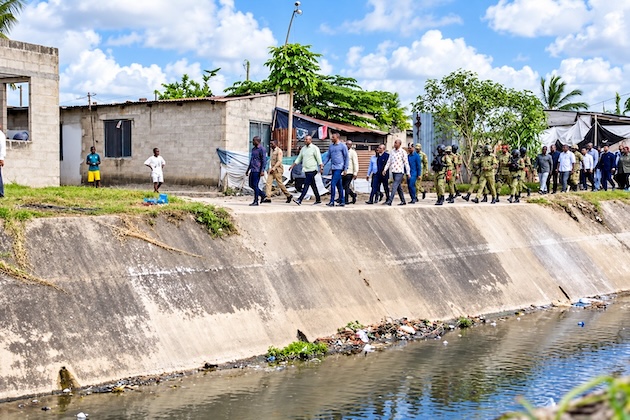 As El Niño Returns, East Africa’s Urban Poor Brace for Heavy Rains
  Hunger is ‘an avoidable tragedy’ in a world of plenty: Türk
  UN condemns deadly wave of drone strikes in war-torn Sudan
  Guterres honours Indonesian troops who paid ‘ultimate sacrifice’