
Sea life’s chemical senses
Science News, September 18, 1971
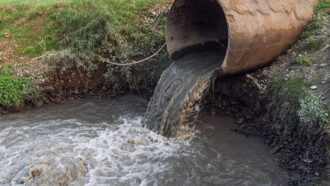
For fish and other underwater life, a sensitivity to chemicals plays the same role as the sense of smell does for land animals.… [Researchers] have been studying the subtle ways this delicate fish-communication system can be disrupted by pollutants…. One study examined the effects of kerosene pollution on the behavior of lobsters…. The experiments demonstrate that chemical communication interference takes place at extremely low dilutions.
Update
Chemical pollution — from sewage and agricultural runoff to pharmaceutical waste — muddles aquatic animals’ senses with potentially dire effects, decades of research has shown. A chemical used to treat sewage seems to limit some fish species’ abilities to form schools, making the fish vulnerable to predators (SN: 10/27/07, p. 262). Drug-tainted waters can have a variety of effects on fish, including suppressing their appetites (SN: 12/20/08, p. 15). A plastic chemical also appears to confuse senses: Its scent can lure sea turtles into eating plastic debris (SN: 3/28/20, p. 14).
 These are the first feathers ever found in fossilized dinosaur poop
  See the secret to DNA hookups
  Meet the newest living cat species, the first described in 100 years
  This year’s El Niño just broke a record months before it’s expected to peak
  Finally, a true blue rose exists
  First series of adult T. rex footprints hints at its walking speed
  The Takeaway: UN General Assembly debate Day 5
  Lavrov issues call for new Eurasian ‘security architecture’
  Cuba warns against ‘law of the jungle’ as Foreign Minister denounces US pressure
  Saudi Arabia warns Gulf security inseparable from global stability amid regional tensions