

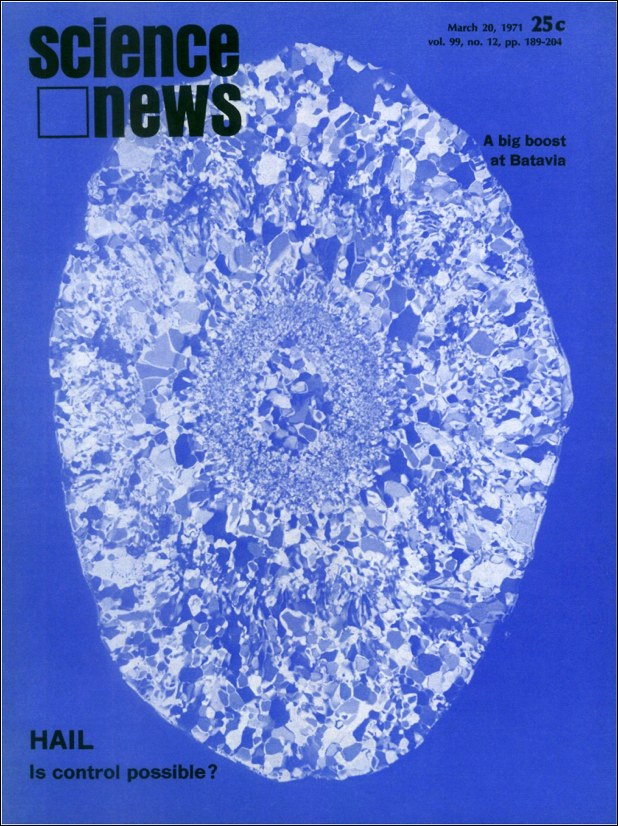
Fooling the brain — Science News, March 20, 1971
Chronic pain can be treated surgically by severing nerves or by destroying a small part of the brain that perceives pain, but these methods are destructive. Doctors … are now treating selected cases of chronic pain … by using electrical impulses [on the spinal cord] to fool the brain.
Update
In 1971, the idea to treat chronic pain by sending electrical impulses to the spinal cord was not brand-new. Researchers tested the first implantable device in patients in the United States in 1967. Such implants gained momentum as a pain treatment in the 1970s, and the U.S. Food and Drug Administration approved the technique in 1989.
Technological advances in the decades since have led to more effective and precise devices. One stimulator interacts with cells in the spinal cord to adjust the amount of electricity based on a patient’s needs, researchers reported in 2020. But spinal cord stimulation can do more than relieve pain: Sending impulses to specific nerve cells at precise times has been shown to help people paralyzed by severe injuries walk again (SN: 11/24/18, p. 6).
 Horned dinosaurs’ weapons evolved to handle the forces of combat
  Artemis II results show how much science people can do at the moon
  Crossword: Time lines
  Many American diets may not include enough of this essential nutrient
 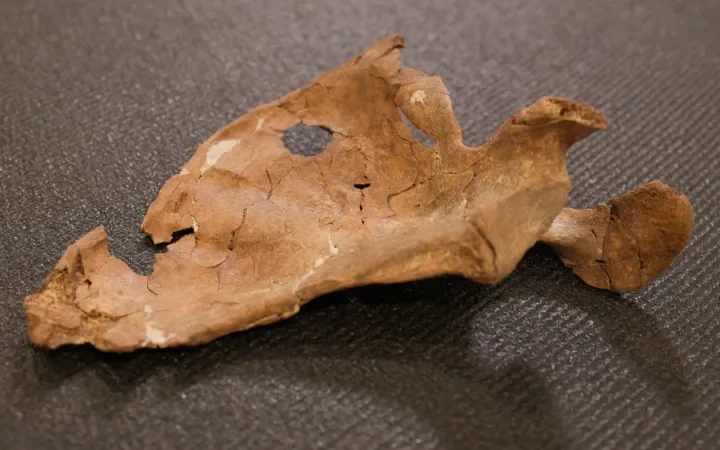 A telling hole in a Neandertal bone hints at a bitter end
  Brain implants are helping people who’ve lost their voice
  COP17: The world has a plan to save nature. Is it working?
  Flour sacks turned flood barriers: Gaza faces another winter without safe shelter
  WHO scales up Ebola readiness in 22 countries across three continents
  Ukraine: Civilian casualty rates among ‘deadliest’ in years, as energy attacks intensify