
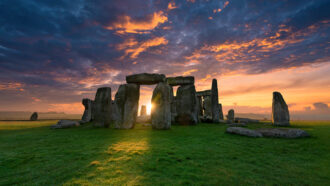
Stonehenge: A calendar or just a crematorium — Science News, November 11, 1972
The monument consisted of a circle of immense, finely tooled stone archways surrounded by a range of 56 equally spaced [holes].… The precisely proportioned placement of the stones and holes has led archaeologists to presume that the monument had some great astrological significance.… As an alternate explanation, the researchers say perhaps there were 56 families, clans or social units who built Stonehenge and who were entitled to dig one of the [holes] and use it to inter cremated remains.
Update
Stonehenge’s purpose remains murky, but the monument’s origin is becoming clearer thanks to science. For at least the first 500 years of its existence, Stonehenge was a cemetery (SN: 5/29/08). A chemical analysis of remains at the site suggests that some of the people interred there came from Wales, more than 200 kilometers west of where Stonehenge stands in southern England (SN: 8/2/18). The monument’s first building blocks also may have come from Wales, repurposed from a stone circle there, but that hypothesis is debated (SN: 2/11/21).
 Many American diets may not include enough of this essential nutrient
 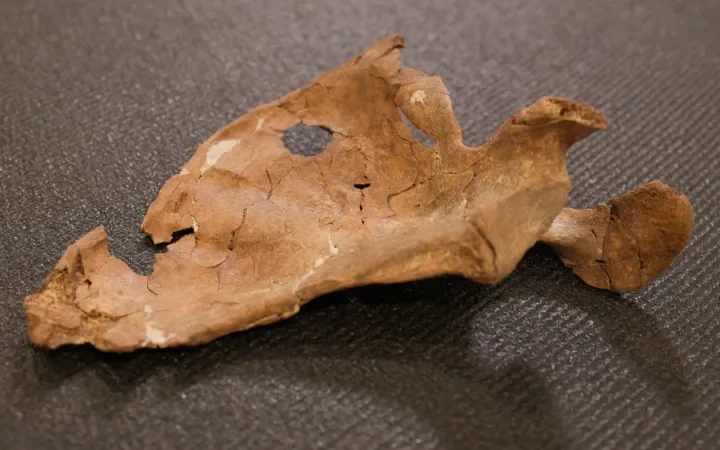 A telling hole in a Neandertal bone hints at a bitter end
  Brain implants are helping people who’ve lost their voice
  Can math stay human in the age of AI?
  Tiny implants can use the body itself to talk to each other
  Voyager 1 is nearly one light-day from Earth. What’s out there?
  Could your brain data be used against you? UN calls for limits on neurotechnology
  Ukraine: Critical health supplies destroyed in ongoing Russian attacks
  AI, green energy and economic transitions risk leaving vulnerable communities behind, UN warns
  Afghanistan faces record hunger levels amid rampant rights violations