

Neptune’s atmospheric temperature is on an unexpected roller-coaster ride, and it could take decades for scientists to piece together what’s happening at the distant planet.
The ice giant’s global temperature dropped about 8 degrees Celsius between 2003 and 2012 at the start of Neptune’s summer, researchers report April 11 in Planetary Sciences Journal. Then from 2018 to 2020, thermal images show that the planet’s south pole brightened dramatically, indicating a spike of 11 degrees C (SN: 10/2/07).
Naomi Rowe-Gurney, a planetary scientist at NASA Goddard Space Flight Center in Greenbelt, Md., and colleagues looked at 17 years of mid-infrared data from ground-based telescopes and the no-longer-functioning Spitzer Space Telescope (SN: 7/18/18; SN: 1/28/20). The researchers used infrared light to pierce Neptune’s top cloud layer and peer at its stratosphere, where the planet’s atmospheric chemistry comes into view.
Each Neptune year lasts 165 Earth years, so the time period analyzed — from 2003 to 2020 — is essentially equivalent to five weeks on Earth. The wildest temperature shift occurred from 2018 to 2020, when the atmospheric temperature at Neptune’s south pole rose from –121° C to –110° C.
“We weren’t expecting any seasonal changes to happen in this short time period, because we’re not even seeing a full season,” says Rowe-Gurney. “It’s all very strange and interesting.”
The researchers don’t yet know what’s causing the temperature changes. The sun’s ultraviolet rays break up methane molecules in the stratosphere, so that chemistry or even the sun’s activity cycle could be a trigger. Nailing down specifics requires more observations. “We need to keep observing over the next 20 years to see a full season and see if something else changes,” says Rowe-Gurney.
 Young Yosemite toads survive winter, then emerge with a deadly fungus
  Are hypernovas real?
  Here’s how brain-eating amoebas may infect people
 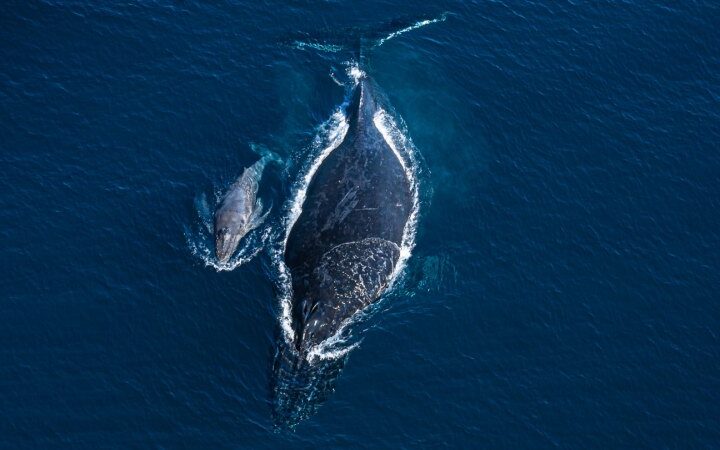 A video of a humpback whale and her dead calf reveals the animals’ bond
  A new map points out U.S. rivers most worth protecting
  Exhaling may speed up reaction times
  ‘I have not lost my dreams’: Refugee education funding cuts threaten millions
  For Pakistan Rising Fistula Cases Make SDG 3 Goal Elusive
 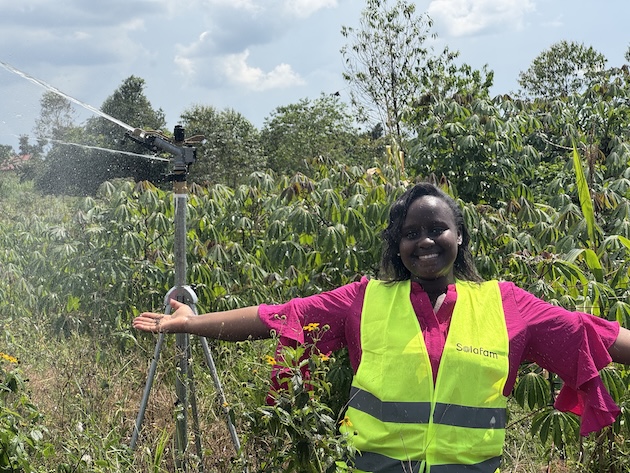 Renewables, Farmer Aggregation Offer Solutions to Africa’s Post-Harvest Losses