
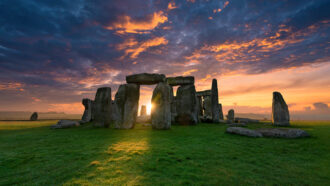
Stonehenge: A calendar or just a crematorium — Science News, November 11, 1972
The monument consisted of a circle of immense, finely tooled stone archways surrounded by a range of 56 equally spaced [holes].… The precisely proportioned placement of the stones and holes has led archaeologists to presume that the monument had some great astrological significance.… As an alternate explanation, the researchers say perhaps there were 56 families, clans or social units who built Stonehenge and who were entitled to dig one of the [holes] and use it to inter cremated remains.
Update
Stonehenge’s purpose remains murky, but the monument’s origin is becoming clearer thanks to science. For at least the first 500 years of its existence, Stonehenge was a cemetery (SN: 5/29/08). A chemical analysis of remains at the site suggests that some of the people interred there came from Wales, more than 200 kilometers west of where Stonehenge stands in southern England (SN: 8/2/18). The monument’s first building blocks also may have come from Wales, repurposed from a stone circle there, but that hypothesis is debated (SN: 2/11/21).
 AI may have solved one of math’s biggest puzzles, raising controversy
  The shingles vaccine may protect the heart
 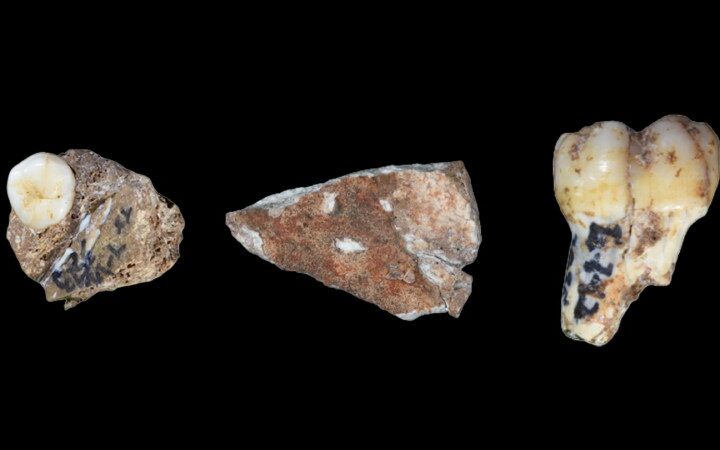 Newfound fossils are spilling Denisovan secrets
  Winter work shows it really pays to be a smart mountain chickadee
  A choir of katydid ancestors filled the Jurassic rainforest with song
  Innocent-looking AI reasoning can make bad behavior harder to catch
  UN hails Libya election deal as Security Council urges Libyans to seize the moment
  Plight of Afghans going ‘from bad to worse’, but the world is looking away: Türk
  Flood-ravaged Nepal calls for climate justice
  Lawmakers Need to Grapple With the ‘Human Story’ of the Aged, Youth, Women and Girls when Making Policy