
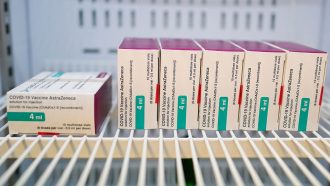
Analysis of the latest data from a clinical trial for a coronavirus vaccine developed by AstraZeneca and the University of Oxford shows the shot is still effective at preventing COVID-19 symptoms, the pharmaceutical company reported March 25.
The news comes after the U.S. National Institutes of Allergy and Infectious Diseases aired concerns that AstraZeneca may have included outdated information in an interim analysis of the trial (SN: 2/22/21). That interim analysis, announced on March 22, found the vaccine was 79 percent effective. The efficacy was based on 141 cases of COVID-19 among the trial’s 32,449 participants, but the cases were recorded only through February 17.
Since that date, more people in the trial tested positive for the coronavirus. The latest analysis included an additional 49 cases, bringing the total to 190, AstraZeneca said in a March 25 statement. Taking the new data into account, the vaccine now has an efficacy of 76 percent — only three percentage points lower than in the interim report. There are an additional 14 possible COVID-19 cases in the trial that researchers still need to confirm, AstraZeneca said in its statement. The company has not specified how many cases were in people who got the vaccine or in those who got a placebo.
The slight decrease in efficacy is not unexpected, Stephen Evans, a vaccine expert at the London School of Hygiene and Tropical Medicine said in a statement released by the Science Media Centre. As more participants in the trial catch the coronavirus and develop symptoms, overall efficacy can fluctuate.
In fact, the vaccine’s efficacy for trial participants aged 65 and older actually got better with the new analysis. While the interim analysis reported an efficacy of 80 percent in that age group, the more recent results push it higher to 85 percent.
It’s unclear whether the results from both analyses are statistically different from one another. It’s possible that the reported efficacies in the groups fall within a similar margin of error, so the differences may mean little in the real world.
The shot is also still highly effective at preventing severe disease and hospitalization, AstraZeneca reports. So far, eight people in the trial have fallen severely ill, all of whom received the placebo.
The rapid analysis redo is the latest stumble in AstraZeneca’s efforts to roll out and build confidence in its vaccine (SN: 11/23/20). But even amid the missteps to pinpoint the efficacy of its vaccine, AstraZeneca’s results still meet the U.S. Food and Drug Administration’s requirements for emergency use authorization. Authorized vaccines must reduce COVID-19 cases by half in vaccinated people compared with unvaccinated people. The FDA will conduct its own scrutiny of the trial data when AstraZeneca applies for emergency use in the coming weeks.
 Was the ‘American cheetah’ a cheetah at all?
  AI agents aren’t ready to replace humans in behavioral research
  A culprit for corrosion may have been operating under our noses
  New Hubble images reveal a bizarre decagon over Saturn’s south pole
  A massive study unveils the genetic underpinnings of fibromyalgia
  The universe may have been building rocky planets almost from the start
  Coordinated action on clean air and climate change can net $15 for every dollar spent
  Human rights chief Türk renews call for end to spiralling Sudan war
  AI: Türk urges action before it becomes an ‘existential risk to humanity’
  UNGA 81: A United Nations at a Turning Point