
Sea life’s chemical senses
Science News, September 18, 1971
For fish and other underwater life, a sensitivity to chemicals plays the same role as the sense of smell does for land animals.… [Researchers] have been studying the subtle ways this delicate fish-communication system can be disrupted by pollutants…. One study examined the effects of kerosene pollution on the behavior of lobsters…. The experiments demonstrate that chemical communication interference takes place at extremely low dilutions.
Update
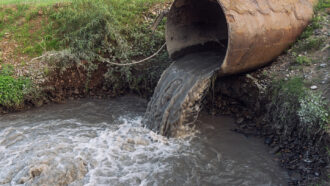
Chemical pollution — from sewage and agricultural runoff to pharmaceutical waste — muddles aquatic animals’ senses with potentially dire effects, decades of research has shown. A chemical used to treat sewage seems to limit some fish species’ abilities to form schools, making the fish vulnerable to predators (SN: 10/27/07, p. 262). Drug-tainted waters can have a variety of effects on fish, including suppressing their appetites (SN: 12/20/08, p. 15). A plastic chemical also appears to confuse senses: Its scent can lure sea turtles into eating plastic debris (SN: 3/28/20, p. 14).
 This magic mushroom can kill
 Light is hard to block from every direction. This physicist found a way
 Science to restore speech is moving fast. Here’s what’s next
 Toxic secrets are hiding in Arctic ice
 Fossil fuel emissions are down in 2026. Green energy isn’t the reason
 Drugs like Ozempic may help reverse chronic kidney disease
 From Nuclear Weapons to Artificial Intelligence, a New Test of Humanity’s Restraint
 FRANCE: ‘The Government Should Learn to Respect Its People, Listen to Them and Consult Them’
 COP31: Why Africa Must Rethink Nuclear Energy