
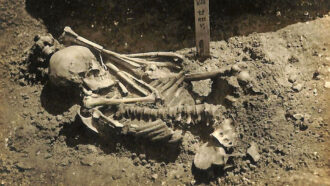
Somewhere off southeastern Japan’s coast around 3,000 years ago, a shark attacked and killed a man who was likely fishing or shellfish diving. Afterward, the victim’s fishing comrades presumably brought the body, minus its sheared off right leg and left hand, back to land for burial.
A new analysis of that unfortunate man’s partial skeleton, excavated around a century ago at a village cemetery near Japan’s Seto Inland Sea, has unveiled that grisly scenario. This individual from Japan’s ancient Jōmon culture (SN: 2/15/97) represents the oldest known human victim of a shark attack, say archaeologist J. Alyssa White of the University of Oxford and colleagues. Radiocarbon dating places his death from 3,391 to 3,031 years ago, the researchers report in the August Journal of Archaeological Science: Reports.
A roughly 1,000-year-old skeleton of a fisherman on Puerto Rico previously displayed the earliest signs of a shark encounter.
White’s group documented at least 790 gouges, punctures and other types of bite damage mainly confined to the Jōmon man’s arms, legs, pelvis and ribs. A 3-D model of these injuries indicates that the victim first lost his left hand trying to fend off a shark. Ensuing bites severed major leg arteries, rapidly leading to death.
After the man’s body was recovered, his mutilated left leg probably detached and was placed on his chest when he was buried, the researchers say.
Numerous shark teeth found at some Jōmon sites suggest that sharks were hunted, perhaps by drawing them to blood while fishing at sea. “But unprovoked shark attacks would have been incredibly rare as sharks do not tend to target humans as prey,” White says.
 These tiny snakes cartwheel to escape danger
  Japan’s sample return mission to Phobos may also collect some Mars dust
  Horned dinosaurs’ weapons evolved to handle the forces of combat
  Artemis II results show how much science people can do at the moon
  Crossword: Time lines
  Many American diets may not include enough of this essential nutrient
 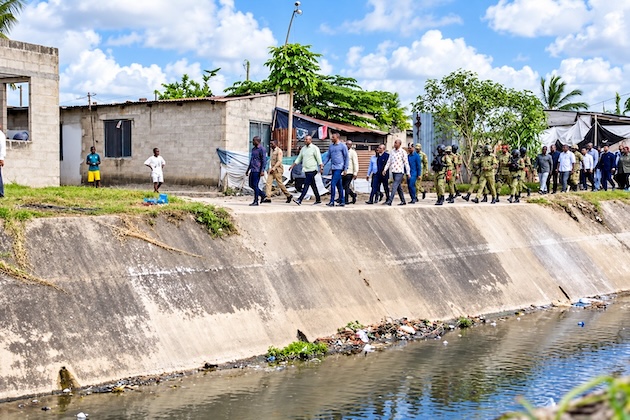 As El Niño Returns, East Africa’s Urban Poor Brace for Heavy Rains
  Hunger is ‘an avoidable tragedy’ in a world of plenty: Türk
  UN condemns deadly wave of drone strikes in war-torn Sudan
 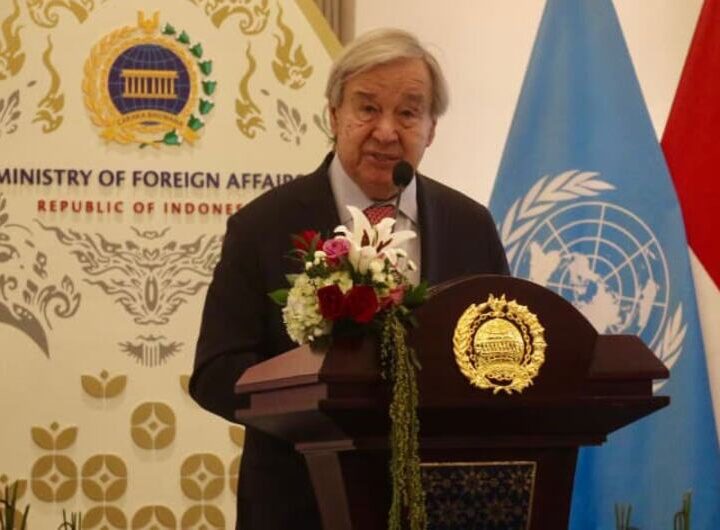 Guterres honours Indonesian troops who paid ‘ultimate sacrifice’