
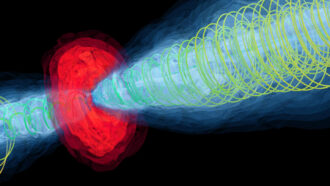
From the maw of the supermassive black hole at the center of the galaxy M87, two enormous jets stream thousands of light-years into space. Scientists still don’t fully understand the physics behind the jets, which are made of a mix of electrically charged particles, or plasma (SN: 3/24/21). But they are “really, really amazing,” says astrophysicist Alejandro Cruz-Osorio of Goethe University Frankfurt. So he and colleagues created a computer simulation of M87’s black hole and the swirling gas that surrounds it in an accretion disk. The aim: Figure out how this black hole — already famous for posing for a picture in 2019 (SN: 4/10/19) — became such a jet-setter.
Under the right conditions, that simulation produces jets that match observations of M87, the researchers report November 4 in Nature Astronomy. The black hole twists up spiraling magnetic fields that surround two high-energy beams of electrons and other charged particles. The results suggest that the black hole must be spinning rapidly, at more than half its maximum speed allowed by the laws of physics and possibly as much as 94 percent of its maximum possible speed.
Getting the energies of the jets’ electrons right turned out to be crucial. When magnetic fields in the jets rearrange in a process known as magnetic reconnection (SN: 8/3/21), electrons get accelerated, resulting in more of them having very high energies. This effect was not included in earlier simulations, but it was key to getting the simulated jets to act like real-world counterparts.
 These tiny snakes cartwheel to escape danger
 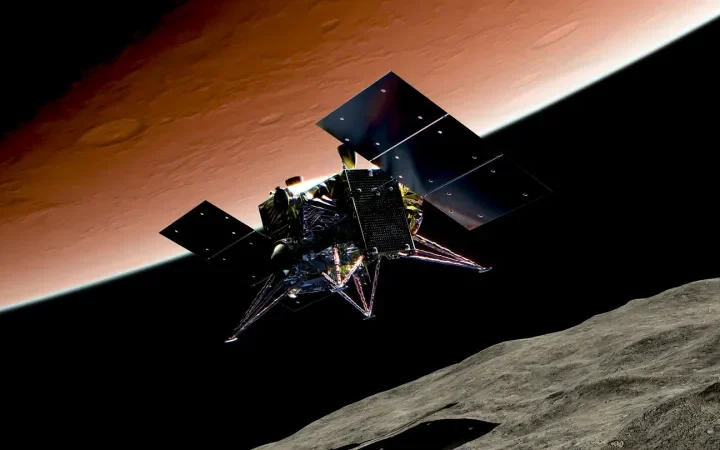 Japan’s sample return mission to Phobos may also collect some Mars dust
  Horned dinosaurs’ weapons evolved to handle the forces of combat
  Artemis II results show how much science people can do at the moon
  Crossword: Time lines
  Many American diets may not include enough of this essential nutrient
  Guterres honours Indonesian troops who paid ‘ultimate sacrifice’
  ‘Season of fear’: Escalating Israeli attacks on West Bank olive farmers, deadly strikes on Gaza
  Haiti: Elections on hold as gangs adapt to security crackdown, Security Council hears
  Protecting Earth’s fragile biodiversity takes spotlight at Armenia talks