
Call it cellular life support for dead pigs. A complex web of pumps, sensors and artificial fluid can move oxygen, nutrients and drugs into pigs’ bodies, preserving cells in organs that would otherwise deteriorate after the heart stops pumping.
The finding, described August 3 in Nature, is preliminary, but it hints at new ways to keep organs in a body healthy until they can be used for transplantation.
In earlier work, scientists built a machine they named BrainEx, which kept aspects of cellular life chugging along in decapitated, oxygen-deprived pig brains (SN: 4/17/19). The new system, called OrganEx, pushes the approach to organs beyond the brain.
“We wanted to see if we could replicate our findings in other damaged organs across the body, and potentially open the door for future transplantation studies,” says Nenad Sestan, a neuroscientist at Yale University School of Medicine.
OrganEx aims to do the job of hearts and lungs by pumping an artificial fluid throughout pig bodies. Mixed in a 1–1 ratio with the animals’ own blood, the lab-made fluid has ingredients that provide fresh oxygen and nutrients, prevent clots and protect against inflammation and cell death.
Anesthetized pigs were put into cardiac arrest and then left alone for an hour. Then some pigs were placed on an existing medical system, called extracorporeal membrane oxygenation, or ECMO. This adds oxygen to the pigs’ own blood and pumps it into their body. Other pigs received the OrganEx treatment.
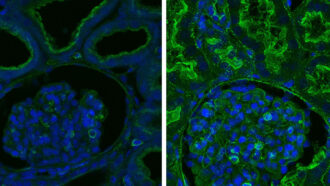
Compared with ECMO, OrganEx provided more fluid to tissues and organs, the researchers found. Fewer cells died, and some tissues, including kidneys, even showed cellular signs of repairing themselves from the damage done after the heart stopped.
A similar system might one day be useful for protecting human organs destined to be donated. But for now, “there is still lots of work to be done in our animal model,” Sestan says.
 Horned dinosaurs’ weapons evolved to handle the forces of combat
  Artemis II results show how much science people can do at the moon
  Crossword: Time lines
  Many American diets may not include enough of this essential nutrient
  A telling hole in a Neandertal bone hints at a bitter end
  Brain implants are helping people who’ve lost their voice
  WHO scales up Ebola readiness in 22 countries across three continents
  Ukraine: Civilian casualty rates among ‘deadliest’ in years, as energy attacks intensify
  As disasters mount, next UN climate summit faces a test of trust
  Gaza: 340 children killed despite ceasefire agreement – UNICEF