
It’s confirmed: Protons and antiprotons are well-matched. The two types of subatomic particles mirror each other in the ratios of their electric charge to mass, a new extremely precise experiment verifies.
Antiprotons are the antimatter counterpart of protons. Every type of matter particle has such an alter ego, with similar properties but opposite electric charge. But antimatter is an enigma: Scientists still don’t understand why matter is common in the universe while antimatter is rare (SN: 11/25/19). To investigate the origins of this asymmetry, scientists keep checking, to ever greater precision, for differences between matter and antimatter particles, which could hint at how matter came to dominate the cosmos.
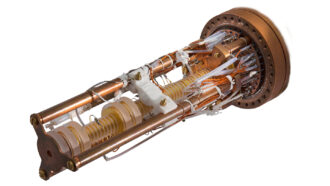
The Baryon Antibaryon Symmetry Experiment, or BASE, at the European particle physics laboratory CERN, near Geneva, measures the oscillations of a single antiproton confined within an electromagnetic trap. These oscillations, which reveal the charge-to-mass ratio of the antiproton, are compared with those of a trapped hydrogen ion, comprising a proton and two electrons, which give the proton charge-to-mass ratio.
After more than 24,000 of these oscillation comparisons, BASE researchers found that the two charge-to-mass ratios mirror one another with a precision of 1.6 billionths of a percent, the team reports January 5 in Nature. That’s more than four times as precise as the previous measurement (SN: 8/12/15).
The result also tests physicists’ understanding of gravity’s effect on antimatter, says Stefan Ulmer, a spokesperson of BASE and physicist at RIKEN in Wako, Japan. The Earth’s gravitational environment changes as the planet orbits the sun, so if gravity affected protons and antiprotons differently, that effect would have surfaced during the year and a half over which the data were taken. “We have shown that antimatter and matter interact with gravity … in an exactly identical way,” to within an uncertainty of 3 percent, Ulmer says.
 A quantum computing feat brings the ‘megaquops’ era a step closer
  AI can give you your voice back
  These tiny snakes cartwheel to escape danger
  Japan’s sample return mission to Phobos may also collect some Mars dust
  Horned dinosaurs’ weapons evolved to handle the forces of combat
 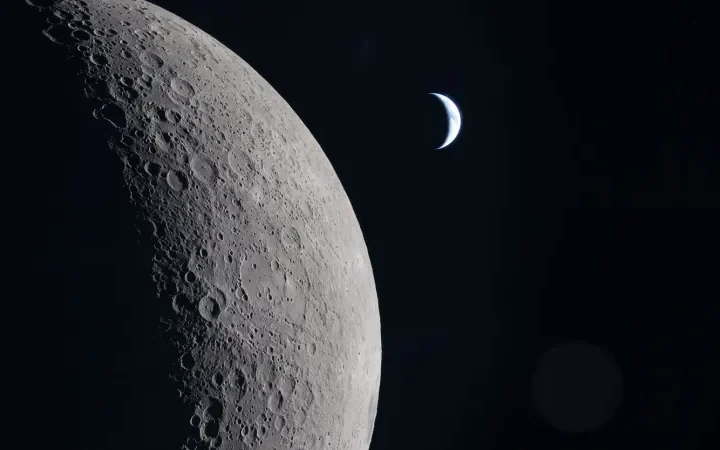 Artemis II results show how much science people can do at the moon
  As El Niño Returns, East Africa’s Urban Poor Brace for Heavy Rains
  Hunger is ‘an avoidable tragedy’ in a world of plenty: Türk