
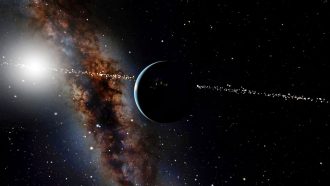
Astronomers look for distant planets by watching for the shadow the worlds cast when passing between their star and Earth. If any aliens are searching for other intelligent life, they could spot us using the same trick.
Now, scientists have identified 1,715 star systems whose hypothetical inhabitants could have seen Earth cross in front of the sun sometime in the last 5,000 years. Another 319 stars will come into the right positions for spotting Earth in the next 5,000 years, astrophysicist Jackie Faherty and astronomer Lisa Kaltenegger report in the June 23 Nature.
Those 2,034 stars had or will have “the front row seat to finding Earth as a transiting planet,” says Faherty, of the American Museum of Natural History in New York City.
Seventy-five of the stars are close enough that human-made radio waves have already reached them, and seven of those stars have potentially habitable planets.
Faherty and Kaltenegger, of Cornell University, used maps of more than 1 billion stars from the European Space Agency’s Gaia spacecraft, which measures stars’ movements and distances from Earth. The researchers identified the Earth transit zone, the region of space from which stars can see Earth cross the sun, and ran the clock backward and forward to see stars move in and out of that zone. “The way I think about this is, ‘Where are we the aliens?’” Kaltenegger says.
Previous research identified stars that can currently see Earth silhouetted against the sun (SN: 4/20/16). But those studies did not take into account stellar movements through space and time. The new work shows that most star systems with a good look at Earth will keep that view for thousands of years.
The newly described stellar collection includes some of the nearest and most well-known stars with planets, including Ross 128 and TRAPPIST-1, with its septet of rocky worlds (SN: 2/22/17).
 These tiny snakes cartwheel to escape danger
 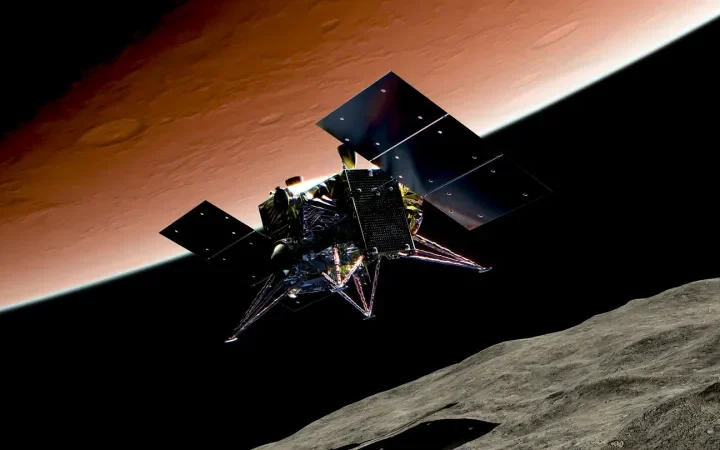 Japan’s sample return mission to Phobos may also collect some Mars dust
  Horned dinosaurs’ weapons evolved to handle the forces of combat
  Artemis II results show how much science people can do at the moon
  Crossword: Time lines
  Many American diets may not include enough of this essential nutrient
  Hunger is ‘an avoidable tragedy’ in a world of plenty: Türk
  UN condemns deadly wave of drone strikes in war-torn Sudan
  Guterres honours Indonesian troops who paid ‘ultimate sacrifice’
  ‘Season of fear’: Escalating Israeli attacks on West Bank olive farmers, deadly strikes on Gaza