

Fossils from the oldest known Homo sapiens individual in East Africa are more ancient than previously thought.
A partial H. sapiens skull and associated skeletal parts found in 1967 in the Kibish rock formation along Ethiopia’s Omo River date to at least around 233,000 years ago, pushing back the age of the fossils by 36,000 years or more. An age well exceeding 200,000 years for the Ethiopian fossils, known as Omo 1, fits with recent fossil discoveries suggesting that H. sapiens evolved across Africa starting roughly 300,000 years ago (SN: 6/7/17).
A volcanic eruption about 233,000 years ago left a layer of ash atop the sediment that yielded the Omo H. sapiens fossils, say volcanologist Céline Vidal of the University of Cambridge and colleagues. That ash layer displayed a chemical fingerprint matching that of a volcanic crater located 350 kilometers northeast of the fossil site. A massive eruption there spewed volcanic ash that wafted to Omo, the researchers say. Dating of hardened ash at the volcanic crater led to the new age estimate for the human fossils, the scientists report January 12 in Nature.
Another Omo ash layer lying near the fossil-bearing sediment, but with uncertain origins, had already been dated to about 197,000 years ago, providing the previous age estimate (SN: 2/22/05). All sediment ages rely on measures of the decay of a radioactive form of the element argon.
Further work will examine whether ash layers below Omo’s fossil-ceding sediment resulted from earlier volcanic blasts. “If successful, we might be able to bracket Omo 1 with a maximum age,” Vidal says.
 A quantum computing feat brings the ‘megaquops’ era a step closer
  AI can give you your voice back
  These tiny snakes cartwheel to escape danger
  Japan’s sample return mission to Phobos may also collect some Mars dust
 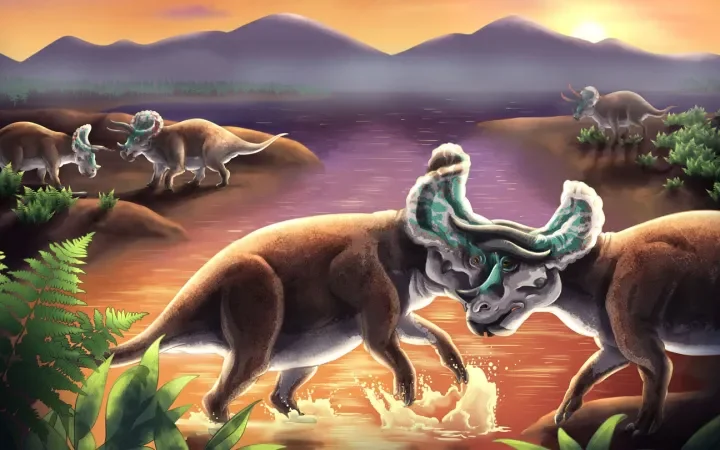 Horned dinosaurs’ weapons evolved to handle the forces of combat
  Artemis II results show how much science people can do at the moon
  As El Niño Returns, East Africa’s Urban Poor Brace for Heavy Rains
  Hunger is ‘an avoidable tragedy’ in a world of plenty: Türk