
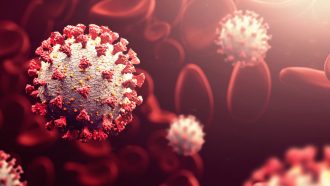
Some people can blame their DNA for making them more likely to get COVID-19 or becoming severely ill if they get infected.
A study of more than 45,000 people with COVID-19 has uncovered 13 genetic variants linked to an increased risk of infection with SARS-CoV-2 or a higher chance of developing severe illness, researchers report July 8 in Nature. The team includes more than 3,300 researchers in 25 countries.
Some of the variants had been uncovered in previous studies. For instance, researchers again confirmed a genetic link between blood type and the likelihood of getting infected, but don’t know why people with type O blood may be slightly protected. The study also verified that a variant that disables the TYK2 gene raises the risk of critical illness and hospitalization. That variant is known to protect against autoimmune disease, but leaves people more vulnerable to tuberculosis.
Sign up for e-mail updates on the latest coronavirus news and research
But at least one association was unknown: A variant in a gene called FOXP4 is associated with more severe COVID-19, the team found. That variant boosts the gene’s activity and has been previously linked to lung cancer and interstitial lung disease, a group of diseases that cause scarring and stiffness of the lungs. Yet-to-be-developed drugs that inhibit activity of FOXP4’s protein might help people recover from COVID-19 or prevent them from becoming very ill.
The disease-associated version of the gene is more common among Asians and Latino populations in the Americas, geneticist Mark Daly said July 7 during a news briefing. This link might never have been discovered if people of diverse ancestries from around the world hadn’t been included in the study, said Daly, of the Institute of Molecular Medicine Finland in Helsinki (SN: 3/4/21). Only 2 percent to 3 percent of people with European ancestry carry the variant, compared with 7 percent of people in the Middle East, 20 percent of Latinos in the Americas and 32 percent of East Asians.
 Magnetism may have helped kick-start our solar system
  Peru’s penguins are on the brink. A super El Niño could make it worse.
  These are the first feathers ever found in fossilized dinosaur poop
  See the secret to DNA hookups
  Meet the newest living cat species, the first described in 100 years
  This year’s El Niño just broke a record months before it’s expected to peak
  LIVE: World leaders take stock of global fight against racism
  Security Council LIVE: Ambassadors meet as West Bank tensions rise, Gaza plan stalls
  DR Congo Ebola emergency: Calls grow for urgent humanitarian access
  Rohingya Camps: Children in Frontline of Food Rationing Crisis