
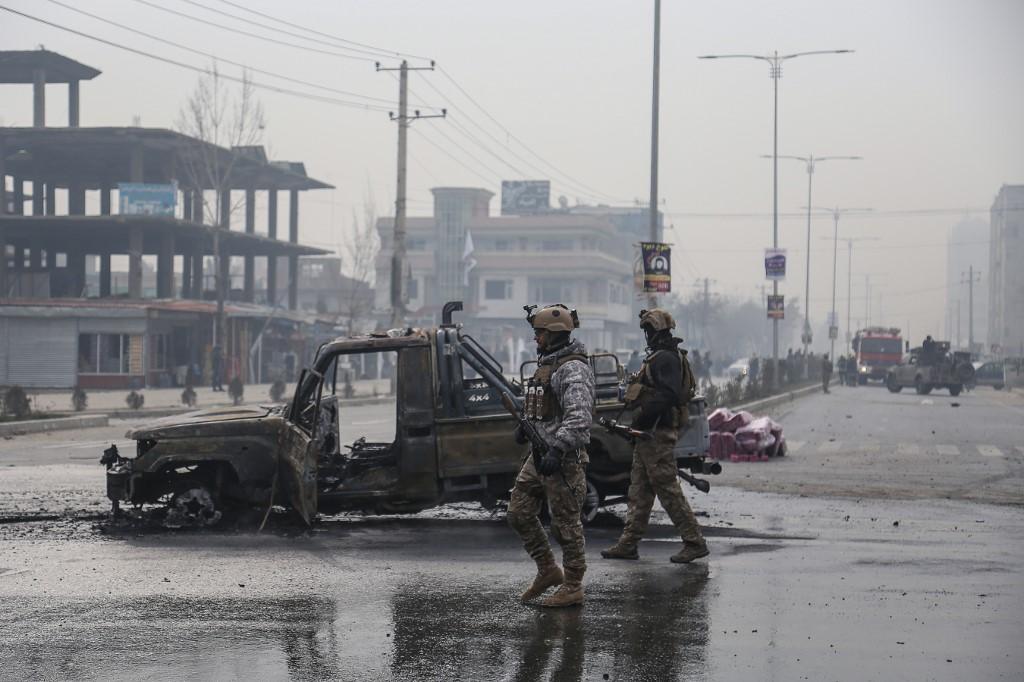
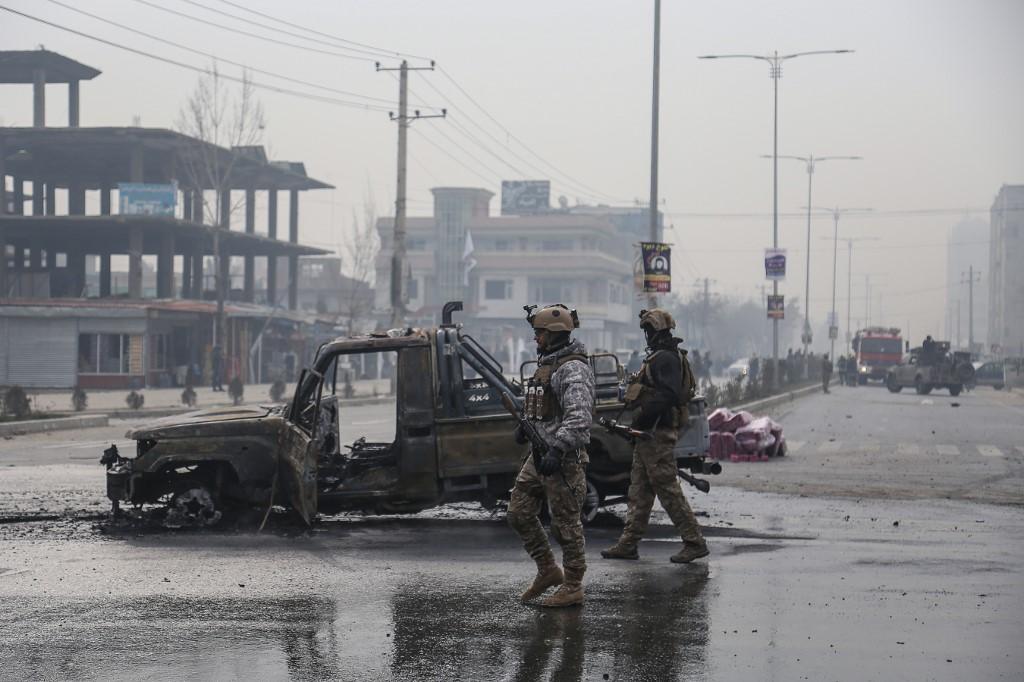
KABUL: A car bomb blast that rocked Afghanistan’s capital Sunday morning killed at least nine people, according to the Afghan Interior Ministry.
Interior Minister Masoud Andarabi told reporters at the site of the bombing that the attack wounded around 20 others, including a member of parliament, Khan Mohammad Wardak. Andarabi said the lawmaker was in “good condition.”
The interior minister added that the casualty toll could rise further.
The attack happened while the lawmaker’s convey was passing through an intersection in Kabul’s Khoshal Khan neighborhood. The blast set afire surrounding civilian vehicles, as well as damaging nearby buildings and shops.
No one immediately claimed responsibility for the attack.
In a statement condemning the attack, Afghan President Ashraf Ghani said that the Taliban should stop violence against civilians and accept a cease-fire, to facilitate the current peace process.
Ghani’s statement did not directly lay blame on the Taliban for Saturday’s attack or offer evidence that the group was responsible for it.
Daesh has claimed responsibility for multiple attacks in the capital of Kabul in recent months, including on educational institutions that killed 50 people, most of them students.
Daesh also claimed responsibility for Saturday’s rocket attacks at the major US base in Afghanistan. There were no casualties in that assault, according to NATO and provincial officials.
A NATO official confirmed the attack and said initial reports indicated that the airfield was not damaged.
In another report from the southern Helmand province, the Afghan Defense Ministry in a statement confirmed that a suicide car bomber tried to attack an army checkpoint, but was identified and shot by soldiers.
Two soldiers were slightly wounded in the attempted assault in Nawa district, the ministry said.
No one claimed responsibility for the attack in Helmand.
Violence in Afghanistan has spiked even as the Taliban and Afghan government negotiators hold talks in Qatar, trying to hammer out a peace deal that could put an end to decades of war. At the same time, the Taliban have waged bitter battles against Daesh fighters, particularly in eastern Afghanistan, while continuing their insurgency against government forces.
Earlier this week, US Gen. Mark Milley, the chairman of the US Joint Chiefs of Staff, held an unannounced meeting with Taliban leaders in Doha to discuss military aspects of last February’s US-Taliban agreement.
The agreement, signed in Qatar where the Taliban maintain a political office, was intended to set the stage for direct peace talks between the Taliban and the Afghan government.
After talks with the Taliban, Milley flew to Kabul to consult with Afghan President Ashraf Ghani. He said he emphasized to both parties the need to rapidly reduce levels of violence across the country.
 Electric stoves could help people with asthma breathe easier
  A nanoparticle revealed the tiny impact of a single gas atom
  Was van Gogh’s ‘The Starry Night’ a flight of fancy or a real sky?
  This ‘living drug’ could change the course of autoimmune disease
  AI could turn scientific papers into research assistants
  A lifesaving medication is not behind the drop in U.S. overdose deaths
  World News in Brief: Russian attacks intensify, UN team tours West Bank, ‘unlawful’ elderly deaths
  Mothers get nearly eight times more paid leave than fathers – and women pay the price
 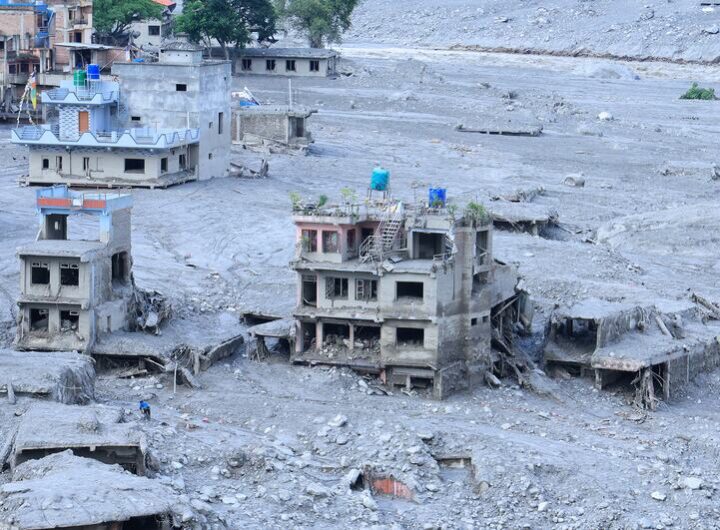 Nepal’s deadly glacier flood a ‘defining moment’ for the international community