

Precise control of the tongue is often vital in life, from the way frogs capture flies to human speech (SN: 1/31/17). But much remains unknown about how the brain controls the tongue, given how its quick motions are difficult to track. Now, experiments show that the brain circuits in mice that help the tongue lick water may be the same ones that help primates reach out to grasp objects, scientists report online May 19 in Nature.
Using high-speed video, neuroscientist Tejapratap Bollu and colleagues recorded the sides and bottoms of mouse tongues as the rodents drank from a waterspout. With the help of artificial intelligence to develop 3-D simulations of the appendages, the researchers discovered that successful licks required previously unknown corrective movements, too fast to be seen in standard video. These adjustments came after the tongue missed unseen or distant droplets, or when the spout was unexpectedly retracted a millimeter or more. Inhibiting a brain region that controls the body’s voluntary motions impaired these corrections, suggesting this brain area was behind these movements.
These newfound corrective motions are similar to ones that primates use when reaching out with their limbs for uncertain targets, the researchers say. Those primate adjustments are also controlled by similar brain circuits as those used by the mice. “This to me shows that mammalian brains use similar principles to control the tongue and the limb,” says Bollu, now at the Salk Institute for Biological Studies in La Jolla, Calif. “Everything we know about reaching in the primates can also be used to understand how the brain controls [tongue] movements.”
Future research with X-ray and MRI scans could show how the brain controls tongue movements associated with chewing and swallowing, which could have clinical applications, Bollu says. The methods used in this work, he notes, could also help yield insights on other muscly appendages, such as elephant trunks and octopus arms.
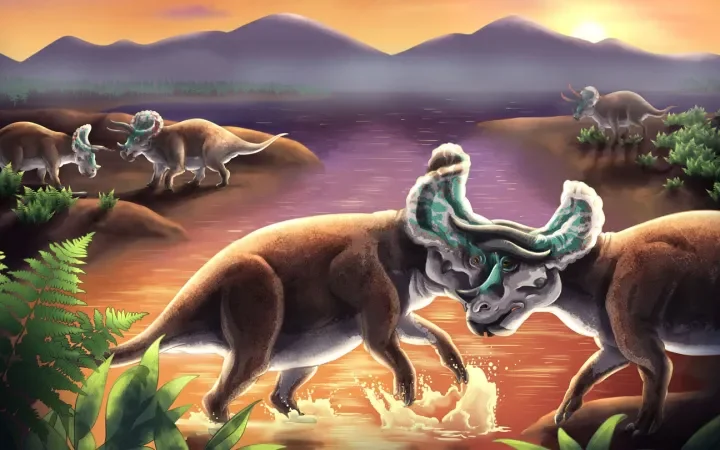 Horned dinosaurs’ weapons evolved to handle the forces of combat
  Artemis II results show how much science people can do at the moon
  Crossword: Time lines
  Many American diets may not include enough of this essential nutrient
 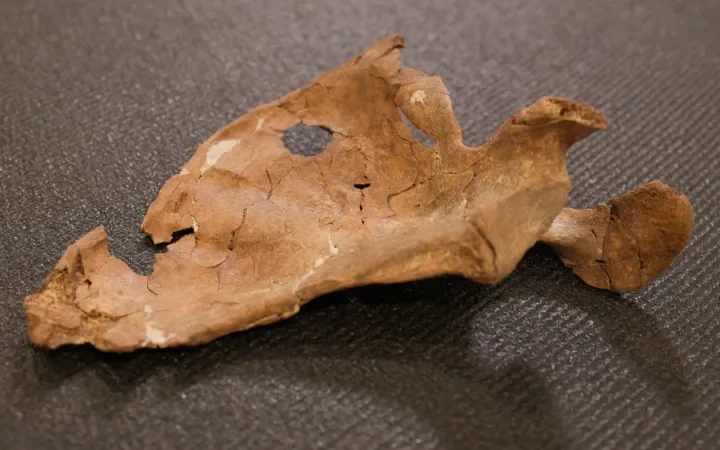 A telling hole in a Neandertal bone hints at a bitter end
  Brain implants are helping people who’ve lost their voice
  Inside the New York ‘time machine’ racing to save a century of sound and film
  Two Summits in Bangkok: IMF/World Bank and Finance Ministers Inside, the People’s Assembly Outside
  CHINA: ‘My Sister Has Been in a Chinese Prison for Eight Years Because I Exercised My Freedom of Speech’
  COP17: The world has a plan to save nature. Is it working?