
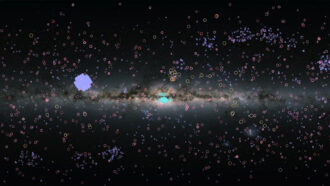
It’s official: The number of planets known beyond our solar system has just passed 5,000.
The exoplanet census surpassed this milestone with a recent batch of 60 confirmed exoplanets. These additional worlds were found in data from NASA’s now-defunct K2 mission, the “second life” of the prolific Kepler space telescope, and confirmed with new observations, researchers report March 4 at arXiv.org.
As of March 21, these finds put NASA’s official tally of exoplanets at 5,005.
It’s been 30 years since scientists discovered the first planets orbiting another star — an unlikely pair of small worlds huddled around a pulsar (SN: 1/11/92). Today, exoplanets are so common that astronomers expect most stars host at least one (SN: 1/11/12), says astronomer Aurora Kesseli of Caltech.
“One of the most exciting things that I think has happened in the last 30 years is that we’ve really started to be able to fill out the diversity of exoplanets,” Kesseli says
Some look like Jupiter, some look — perhaps — like Earth and some look like nothing familiar. The 5,005 confirmed exoplanets include nearly 1,500 giant gassy planets, roughly 200 that are small and rocky and almost 1,600 “super-Earths,” which are larger than our solar system’s rocky planets and smaller than Neptune (SN: 8/11/15).
Astronomers can’t say much about those worlds beyond diameters, masses and densities. But several projects, like the James Webb Space Telescope, are working on that, Kesseli says (SN: 1/24/22). “Not only are we going to find tons and tons more exoplanets, but we’re also going to start to be able to actually characterize the planets,” she says.
And the search is far from over. NASA’s newest exoplanet hunter, the TESS mission, has confirmed more than 200 planets, with thousands more yet to verify, Kesseli says (SN: 12/2/21). Ongoing searches from ground-based telescopes keep adding to the count as well.
“There’s tons of exoplanets out there,” Kesseli says, “and even more waiting to be discovered.”
 A quantum computing feat brings the ‘megaquops’ era a step closer
  AI can give you your voice back
  These tiny snakes cartwheel to escape danger
  Japan’s sample return mission to Phobos may also collect some Mars dust
  Horned dinosaurs’ weapons evolved to handle the forces of combat
 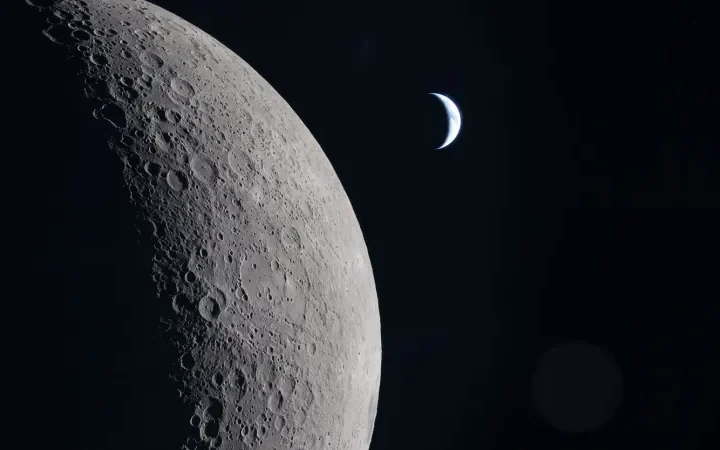 Artemis II results show how much science people can do at the moon
  Yemen war continues to force families from homes amid hunger and disease
  Afghan Women Defy Taliban Restrictions Through Online Protests
  Food Insecurity and Child Malnutrition Worsen in Afghanistan Despite Strong Agricultural Season
  People Who Choose to End Their Lives