

If you could peer into a particle physicist’s daydream, you might spy a vision of a giant lunar particle accelerator. Now, researchers have calculated what such an enormous, hypothetical machine could achieve.
A particle collider encircling the moon could reach an energy of 14 quadrillion electron volts, physicists report June 6 at arXiv.org. That’s about 1,000 times the energy of the world’s biggest particle accelerator, the Large Hadron Collider, or LHC, at CERN near Geneva.
It’s not an idea anyone expects will become reality anytime soon, says particle physicist James Beacham of Duke University. Instead, he and physicist Frank Zimmermann of CERN considered the possibility “primarily for fun.” But physicists of future generations could potentially build a collider on the moon, Beacham says.
Such a fantastical machine would probably be buried under the moon’s surface to avoid wild temperature swings, the researchers say, and could be powered by a ring of solar panels around the moon.
To understand how the laws of physics work at energies higher than that of the LHC, scientists will need bigger accelerators (SN: 1/22/19). For example, the proposed Earth-based Future Circular Collider would be 100 kilometers in circumference, dwarfing the LHC’s 27-kilometer ring. A collider encircling the moon would be about 11,000 km around.
While building a collider that big on Earth might be possible, it could potentially displace people who live in its path — not an issue on the moon. But, like other proposed projects that could alter the moon’s appearance (SN: 6/7/19), the idea raises thorny questions about who gets to decide the fate of the Earth’s companion, Beacham acknowledges. Those questions will presumably be left for future generations to sort out.
 These tiny snakes cartwheel to escape danger
 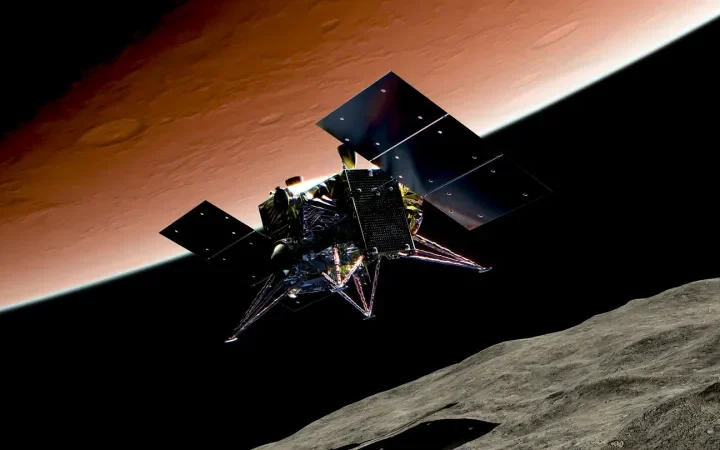 Japan’s sample return mission to Phobos may also collect some Mars dust
 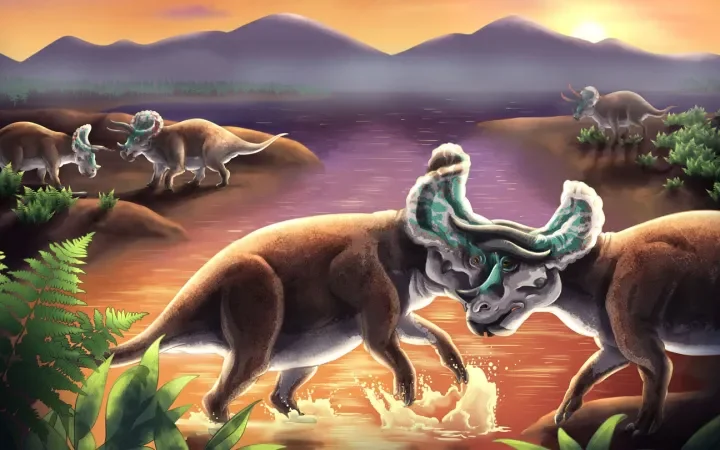 Horned dinosaurs’ weapons evolved to handle the forces of combat
 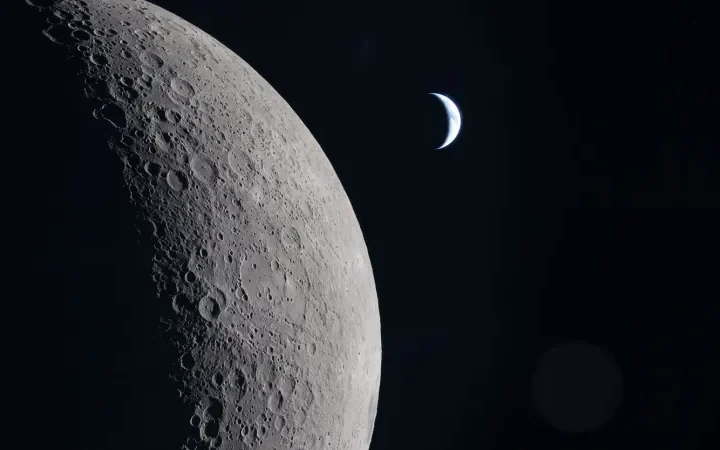 Artemis II results show how much science people can do at the moon
  Crossword: Time lines
  Many American diets may not include enough of this essential nutrient
  Protecting Earth’s fragile biodiversity takes spotlight at Armenia talks
  Gaza: Funding cuts leave half a million without food assistance
  Afro-Brazilian Religious Communities Face Mounting Discrimination Amid the Climate Crisis