
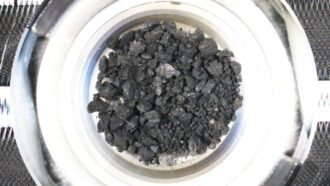
Samples of the asteroid Ryugu are the most pristine pieces of the solar system that scientists have in their possession.
A new analysis of Ryugu material confirms the porous rubble-pile asteroid is rich in carbon and finds it is extraordinarily primitive (SN: 3/16/20). It is also a member of a rare class of space rocks known as CI-type, researchers report online June 9 in Science.
Their analysis looked at material from the Japanese mission Hayabusa2, which collected 5.4 grams of dust and small rocks from multiple locations on the surface of Ryugu and brought that material to Earth in December 2020 (SN: 7/11/19; SN: 12/7/20). Using 95 milligrams of the asteroid’s debris, the researchers measured dozens of chemical elements in the sample and then compared abundances of several of those elements to those measured in rare meteorites classified as CI-type chondrites. Fewer than 10 meteorites found on Earth are CI chondrites.
This comparison confirmed Ryugu is a CI-type chondrite. But it also showed that unlike Ryugu, the meteorites appear to have been altered, or contaminated, by Earth’s atmosphere or even human handling over time. “The Ryugu sample is a much more fresh sample,” says Hisayoshi Yurimoto, a geochemist at Hokkaido University in Sapporo, Japan.
The researchers also measured the abundances of manganese-53 and chromium-53 in the asteroid and determined that melted water ice reacted with most of the minerals around 5 million years after the solar system’s start, altering those minerals, says Yurimoto. That water has since evaporated, but those altered minerals are still present in the samples. By studying them, the researchers can learn more about the asteroid’s history.
 Horned dinosaurs’ weapons evolved to handle the forces of combat
  Artemis II results show how much science people can do at the moon
  Crossword: Time lines
  Many American diets may not include enough of this essential nutrient
 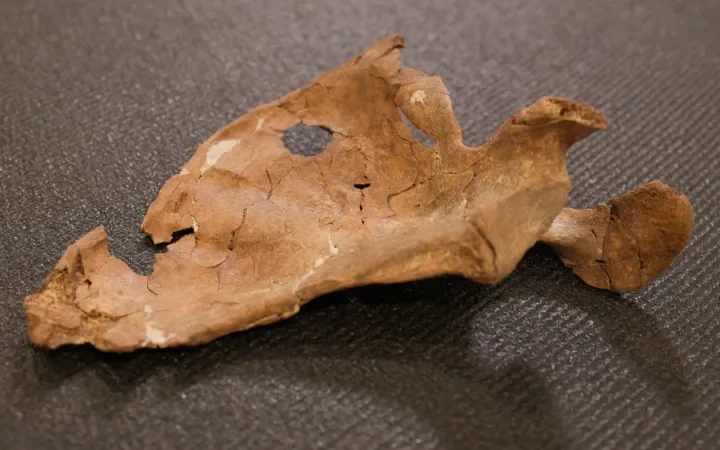 A telling hole in a Neandertal bone hints at a bitter end
  Brain implants are helping people who’ve lost their voice
  COP17: The world has a plan to save nature. Is it working?
  Flour sacks turned flood barriers: Gaza faces another winter without safe shelter
  WHO scales up Ebola readiness in 22 countries across three continents
  Ukraine: Civilian casualty rates among ‘deadliest’ in years, as energy attacks intensify