
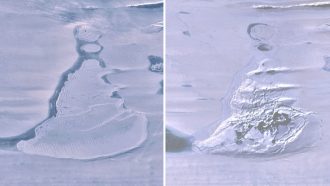
On June 5, 2019, a massive, ice-covered lake sat atop East Antarctica’s Amery Ice Shelf. Within six days, all 600 million to 750 million cubic meters of lake water had vanished, leaving a deep sinkhole filled with fractured ice.
“The amount of water that was in the lake was twice that of San Diego Bay. We’re talking about a lot of water,” says Helen Fricker, a glaciologist at Scripps Institution of Oceanography in La Jolla, Calif. Now, using satellite data to reconstruct the event, scientists have solved the mystery of the disappearing lake.
Most likely, the weight of all that water fractured the ice shelf below. Channels in the ice then formed, and the water drained away all at once, in a Niagara Falls–like rush, glaciologist Roland Warner, Fricker and colleagues report June 23 in Geophysical Research Letters.
Before they knew about the lake, the scientists first spotted the sinkhole. “It was serendipitous,” Fricker says. Warner, of the University of Tasmania in Hobart, Australia, had been browsing satellite images of Antarctica in January 2020 while tracking a path of smoke lofted into the stratosphere by Australian wildfires (SN: 3/4/20).
Warner saw an icy depression, called a doline, spanning 11 square kilometers and about 80 meters deep. Going through the archives, he, Fricker and their colleagues pinned down when the depression formed. Older satellite images revealed that a lake had been at that spot since at least 1973. Using laser altimeter satellite data, the team gleaned estimates of surface elevation changes over time and from those estimated how much water the lake once held (SN: 12/18/05).
It’s unclear whether the lake’s disappearance is linked to climate change. Icy lakes and dolines occur regularly on this ice shelf, Fricker says. But this is the first time that scientists have had evidence to piece together how such an event happens.
 These tiny snakes cartwheel to escape danger
 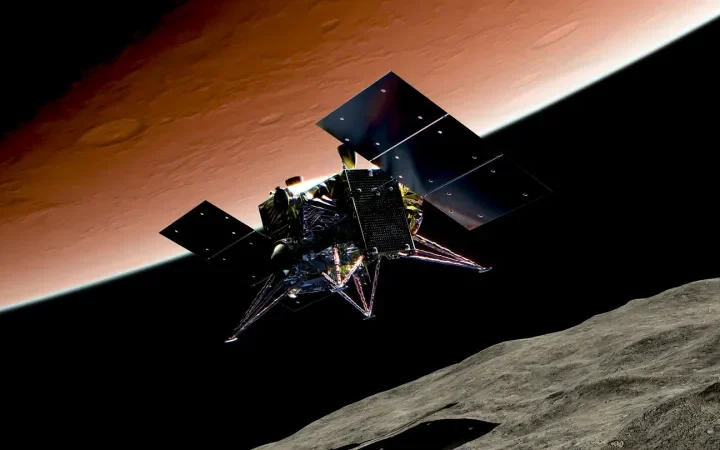 Japan’s sample return mission to Phobos may also collect some Mars dust
 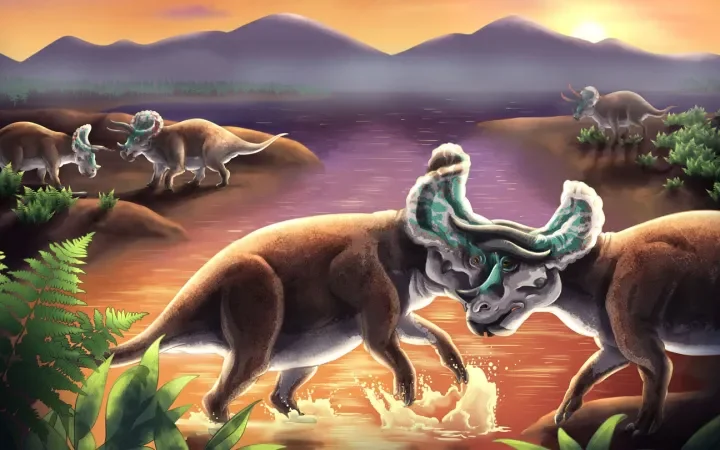 Horned dinosaurs’ weapons evolved to handle the forces of combat
 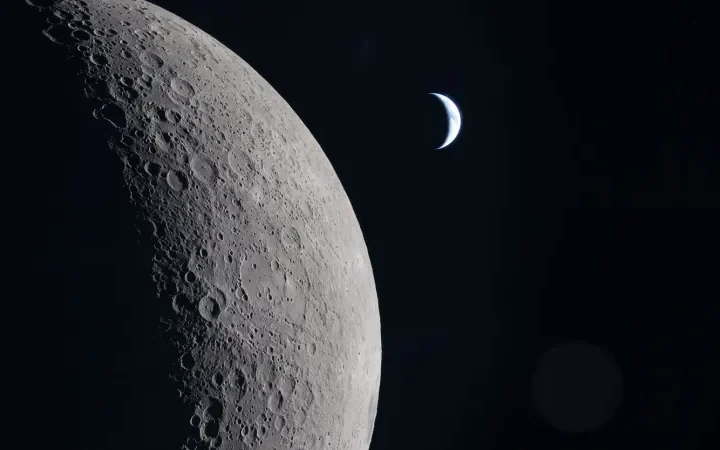 Artemis II results show how much science people can do at the moon
  Crossword: Time lines
  Many American diets may not include enough of this essential nutrient
  As El Niño Returns, East Africa’s Urban Poor Brace for Heavy Rains
  Hunger is ‘an avoidable tragedy’ in a world of plenty: Türk
  UN condemns deadly wave of drone strikes in war-torn Sudan
  Guterres honours Indonesian troops who paid ‘ultimate sacrifice’