

In American football, some passes are caught and some are dropped — but all wobble as they fly.
Spiraling pigskins tend to visibly wobble at either a slow or fast frequency, depending on how the ball is thrown, researchers report online June 23 in the ASME Open Journal of Engineering. That wobble, and to a lesser extent Earth’s rotation and the ball’s spin, cause passes to stray sideways — so don’t completely blame the quarterback this upcoming season.
“The fact that [a football] wobbles and the fact that it doesn’t go straight — those are the two big effects that you see in a pass,” says mechanical engineer John Dzielski of the Stevens Institute of Technology in Hoboken, N.J.
Using physics equations from ballistics studies and data from wind tunnel experiments with footballs, Dzielski and software engineer Mark Blackburn, also of the Stevens Institute, ran computer simulations of a spiraling football pass.
They found that a pigskin flying at around 27 meters per second with around 600 rotations per minute would visibly wobble either one or five times per second. Wobbling occurs as the ball’s spinning momentum interacts with a twisting force that acts to turn the football’s nose away from the direction of flight. The faster wobble dominates when extra energy is applied during throws by twisting of the wrist or lateral motion of the arm.
That wobbling generates lift that pushes the ball sideways, potentially changing the landing point by several meters, the team reports. Earth’s rotation also could cause a pass to drift several centimeters. And the Magnus effect — whereby a spinning projectile becomes sandwiched by low- and high-pressure zones of air, bending its trajectory — had double that impact.
Dzielski and Blackburn are now interested in refining their simulations by developing an instrument to gather data from footballs in flight.
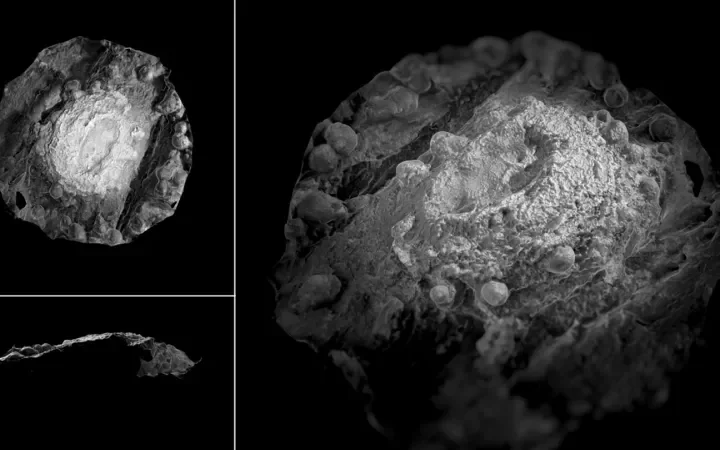 This may be the best evidence yet that dinosaur blood can fossilize
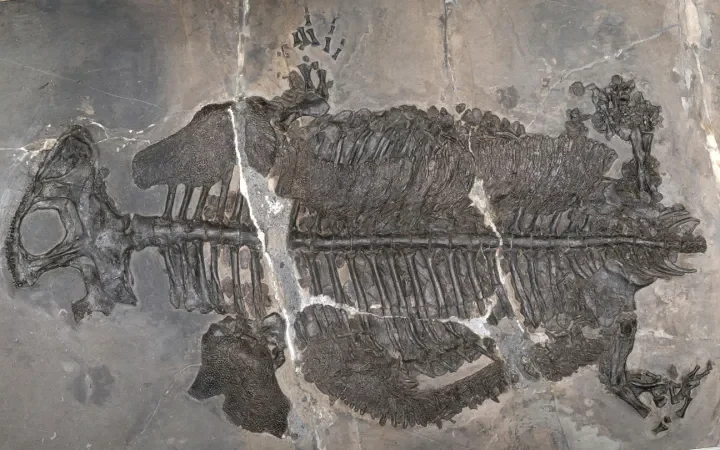 This armored amphibian once lived and hunted on the seafloor
 How octopuses squeeze through tiny openings, step by step
 Record-low temperature created on China’s space station
 Little Ice Age cooling in Europe may have raised the risk of rickets
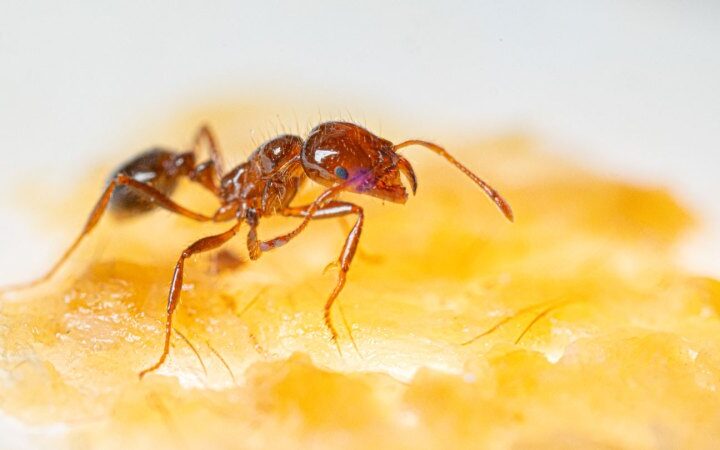 Earwax’s surprisingly slippery but sticky properties deters insects
 Sixty Years on, UN Is Finally Interpreting Freedom of Association
 Why Geohazards Must Be Part of the Pacific’s Resilience Agenda
 Behind Taliban Dress Code Arrests, Afghan Activists See a Campaign to Silence Critics