
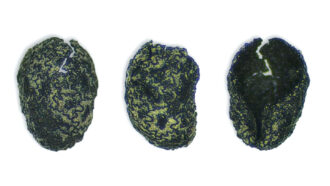
Ancient North Americans started using tobacco around 12,500 to 12,000 years ago, roughly 9,000 years before the oldest indications that they smoked the plant in pipes, a new study finds.
This discovery replaces the pipe-smoking report as the oldest direct evidence for the human use of tobacco anywhere in the world.
Excavations at the Wishbone site in Utah’s Great Salt Lake Desert uncovered four charred seeds of wild tobacco plants in a small fireplace, say archaeologist Daron Duke of Far Western Anthropological Research Group in Henderson, Nev., and colleagues.
Those seeds, three of which the scientists radiocarbon dated, likely came from plants gathered on foothills or mountains located 13 kilometers or more from the Wishbone area, Duke’s team reports October 11 in Nature Human Behavior.
The site was located in a sprawling marshland at the time of its occupation. Finds in and around the fireplace include bones of ducks and other waterfowl, a long, intact stone point and another point broken in two, a bone implement and seeds of several edible wetland plants.
It’s unclear how ancient North American hunter-gatherers used the tobacco, Duke says. Wads of tobacco leaves, stems and other plant fibers may have been twisted into balls and chewed or sucked, with attached seeds spit out or discarded. Ancestors of Pueblo people in what’s now Arizona chewed wild tobacco between around 1,000 and 2,000 years ago. Tobacco smoking can’t be ruled out at the Wishbone site, Duke adds.
The earliest evidence of domesticated tobacco, which comes from South America, dates to only about 8,000 years ago (SN: 10/29/18). Duke suspects various ancient American populations independently tamed the plant at different times. “Certain groups wound up domesticating particular [tobacco] species, typically alongside food crops,” he suggests.
 Scientists may have seen dark matter. If they did, what exactly is it?
  A ‘phoenix’ planet was born from the ashes of its dead star
  Astronomers say they’ve spotted the first miniature quasar pointed at Earth
  Young Yosemite toads survive winter, then emerge with a deadly fungus
  Are hypernovas real?
  Here’s how brain-eating amoebas may infect people
  One day behind bars: Students and incarcerated women break prison stigma in Thailand
  Sudan: Driver killed in aerial attack on aid trucks in South Kordofan
  UN upholds housing as a human right on World Habitat Day