

CHICAGO — The last key ingredient for life has been discovered on Saturn’s icy moon Enceladus.
Phosphorus is a vital building block of life, used to construct DNA and RNA. Now, an analysis of data from NASA’s Cassini spacecraft reveals that Enceladus’ underground ocean contains the crucial nutrient. Not only that, its concentrations there may be thousands of times greater than in Earth’s ocean, planetary scientist Yasuhito Sekine reported December 14 at the American Geophysical Union’s fall meeting.
The essential element may abound on many other icy worlds too, holding promise for the search for alien life, said Sekine, of the Tokyo Institute of Technology.
“We knew that Enceladus had most of the elements that are essential for life as we know it — carbon, hydrogen, nitrogen, oxygen and sulfur,” says Morgan Cable, an astrobiologist at the Jet Propulsion Laboratory in Pasadena, Calif., who was not involved in the research. “Now that [phosphorus] has been confirmed … Enceladus now appears to meet all of the criteria for a habitable ocean.”
Many researchers consider Enceladus to be among the most likely places to house extraterrestrial life. It’s a world encased in ice, with an ocean of salty water hidden beneath (SN: 11/6/17). What’s more, in 2005 the Cassini spacecraft observed geysers blasting vapor and ice grains out of Enceladus’ icy shell (SN: 8/23/05). And in that space-faring spray, scientists have detected organic molecules.
But until now, researchers weren’t sure if phosphorus also existed on Enceladus. On Earth’s surface, the element is relatively scarce. Much of the phosphorus is locked away in minerals, and its availability often controls the pace at which life can proliferate.
So Sekine and colleagues analyzed chemical data, collected by the now-defunct Cassini, of particles in Saturn’s E ring, a halo of material ejected from Enceladus’ jets that wraps around Saturn.
Some ice grains in the E ring are enriched in a phosphorus compound called sodium phosphate, the researchers found. They estimate that a kilogram of water from Enceladus’ ocean contains roughly 1 to 20 millimoles of phosphate, a concentration thousands of times greater than in Earth’s big blue ocean.
At the floor of Enceladus’ subsurface ocean, phosphate may arise from reactions between seawater and a phosphate-bearing mineral called apatite, Sekine said, before being ejected through geysers into space. Apatite is often found in carbonaceous chondrites, a primitive, planet-building material (SN: 7/14/17).
But that’s not all. Many other icy ocean worlds may contain apatite as well, Sekine said. Similarly, they too could also carry high levels of phosphate in their oceans. That richness could be a boon for any potential alien organisms.
Though the findings are promising, they give rise to a glaring conundrum, Sekine said. “If life exists [on] Enceladus, why [does] such [an] abundance of chemical energy and nutrients remain?” After all, here on Earth, any available phosphorus is rapidly scavenged by life.
It’s possible that the moon is simply barren of life, Sekine said. But there’s another more hopeful explanation too. Life on frigid Enceladus, he said, may simply consume the nutrient at a sluggish pace.
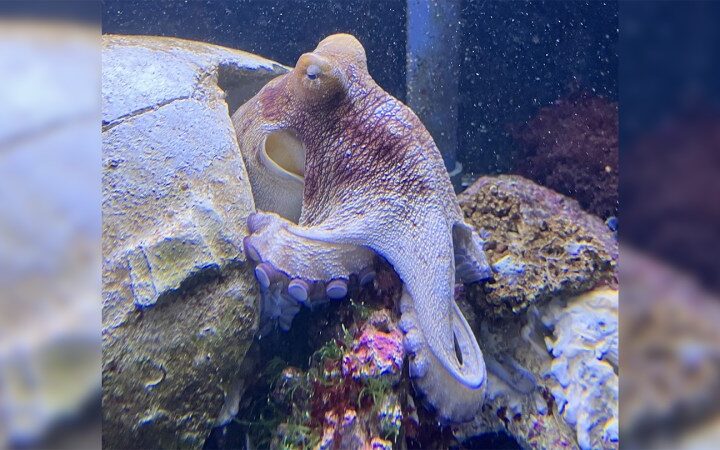 How octopuses squeeze through tiny openings, step by step
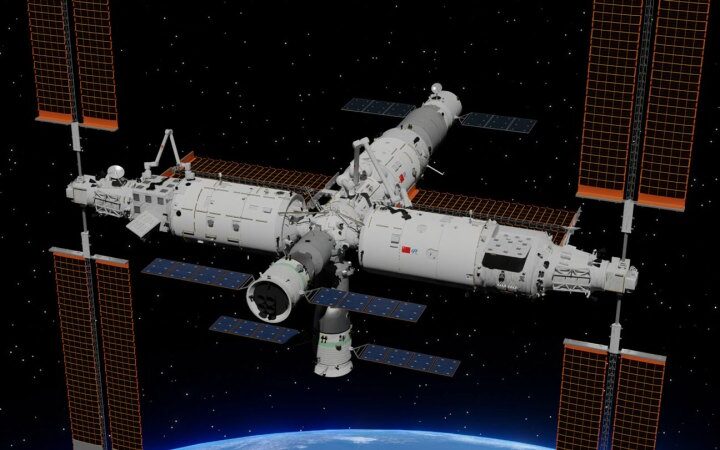 Record-low temperature created on China’s space station
 Little Ice Age cooling in Europe may have raised the risk of rickets
 Earwax’s surprisingly slippery but sticky properties deters insects
 Food contains thousands of overlooked chemicals. This physicist is mapping them
 How hawkmoths turned their genitals into bat-busting weapons
 Abyei: Deadly drone strikes mark ‘new and concerning’ threat, UN peacekeeping chief warns
 World News in Brief: Korea tensions mount, UN demands answers over staff death in Yemen, Guterres in Spain, Nepal alert ahead of COP31
 Two new Ebola vaccines to join DR Congo clinical trial
 Children at risk as war zone attacks on water and sanitation more than triple