
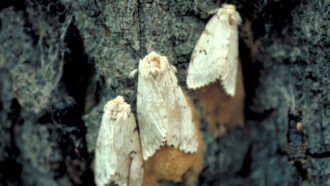
A menacing pest just became a bit less problematic, at least socially, after getting an update to its common name. Lymantria dispar is an invasive insect previously known as the gypsy moth — a label that contains an ethnic slur. On March 2, the Entomological Society of America renamed L. dispar the spongy moth.
The updated term is a nod to the moth’s porous egg casing. It was selected through ESA’s Better Common Names Project, after hundreds of new name suggestions for L. dispar poured in from the public after the society retired the old name last July (SN: 8/25/21). ESA elected the moth for a rebrand primarily due to its frequent presence in conversation. Now, entomologists and gardeners alike can discuss the pervasive pest without using pejorative language. It’s one action in a larger mission to decolonize science, which aims, in part, to create a more diverse and inclusive atmosphere in science.
“Decolonizing science is actually a really broad process,” says Jessica Ware, the president of ESA and an entomologist at the American Museum of Natural History. “Addressing common names is just one piece of that.”
This is the first rebranding that the project has tackled. It will continue to gather input on insect names that perpetuate stereotypes or contain insulting references. Ware says dozens of species are waiting to be addressed, such as the Asian giant hornet (Vespa mandarinia). And insects aren’t the only offenders: Birds, mammals and plants often have names referencing racial or ethnic slurs or white colonizers.
 Magnetism may have helped kick-start our solar system
  Peru’s penguins are on the brink. A super El Niño could make it worse.
  These are the first feathers ever found in fossilized dinosaur poop
  See the secret to DNA hookups
  Meet the newest living cat species, the first described in 100 years
  This year’s El Niño just broke a record months before it’s expected to peak
  World News in Brief: Refugee funding, US migration policy triggers ‘cascade’ of rights violations, world forests report, restorative justice in Colombia
  From energy crisis to energy transition: How renewables are reshaping energy security
  Sudan tells UN: No imposed solutions to country’s conflict
  ‘Ballot must replace the bullets’, South Sudan tells General Assembly ahead of elections