
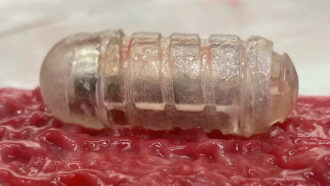
A mucus-wicking robotic pill may offer a new way to deliver meds.
The multivitamin-sized device houses a motor and a cargo hold for drugs, including ones that are typically given via injections or intravenously, such as insulin and some antibiotics. If people could take such drugs orally, they could potentially avoid daily shots or a hospital stay, which would be “a huge game changer,” says MIT biomedical engineer Shriya Srinivasan.
But drugs that enter the body via the mouth face a tough journey. They encounter churning stomach acid, raging digestive enzymes and sticky slicks of mucus in the gut. Intestinal mucus “sort of acts like Jell-O,” Srinivasan says. The goo can trap drug particles, preventing them from entering the bloodstream.
The new device, dubbed RoboCap, whisks away this problem. The pill uses surface grooves, studs and torpedo-inspired fins to scrub away intestinal mucus like a miniature brush whirling inside a bottle. In experiments in pigs, RoboCap tunneled through mucus lining the walls of the small intestine, depositing insulin or the IV antibiotic vancomycin along the way, Srinivasan and colleagues report September 28 in Science Robotics. After churning for about 35 minutes, the pill continued its trip through the gut and eventually out of the body.
RoboCap is the latest pill-like gadget made to be swallowed. In 2019, some of the same researchers who developed RoboCap debuted a different device — one that injects drugs by pricking the inside of the stomach (SN: 2/7/19). That pea-sized injector was not designed to work in the small intestine, where some drugs are most easily absorbed. The RoboCap may also be able to deliver larger drug payloads, Srinivasan says.
A robotic pill called RoboCap churns through viscous mucus (stained red) and intestinal juices (green) in a lab dish (shown sped up in the first clip in this video). In experiments in pigs, the pill cleared mucus from the lining of the small intestine to deliver insulin or antibiotics.
 Many American diets may not include enough of this essential nutrient
  A telling hole in a Neandertal bone hints at a bitter end
  Brain implants are helping people who’ve lost their voice
  Can math stay human in the age of AI?
  Tiny implants can use the body itself to talk to each other
  Voyager 1 is nearly one light-day from Earth. What’s out there?
  Could your brain data be used against you? UN calls for limits on neurotechnology
  Ukraine: Critical health supplies destroyed in ongoing Russian attacks
  AI, green energy and economic transitions risk leaving vulnerable communities behind, UN warns
  Afghanistan faces record hunger levels amid rampant rights violations