

A newly discovered exoplanet is really making astronomers prove their mettle. Planet GJ 367b is smaller than Earth, denser than iron and hot enough to melt, researchers report in the Dec. 3 Science.
“We think the surface of this exoplanet could be molten,” says astronomer Kristine Wei Fun Lam of the Institute of Planetary Research at the German Aerospace Center in Berlin.
Signals of the planet were first spotted in data from NASA’s TESS telescope in 2019. The small world swung around its host star every 7.7 hours.
Using data from TESS and the ground-based HARPS spectrograph at the European Southern Observatory in Chile, Lam and her colleagues measured the planet’s radius and mass. GJ 367b clocked in at about 0.72 times Earth’s radius and 0.55 times its mass. That makes it the first ultrashort-period planet — a class of worlds with years shorter than one Earth day and with mysterious origins — known to be smaller and lighter than Earth.
Using those measurements, the team then calculated the planet’s density: about 8.1 grams per cubic centimeter, or slightly denser than iron. A computer analysis of the planet’s interior structure suggests that 86 percent of it could comprise an iron core, with only a sliver of rock left on top.
Mercury has a similarly large core, Lam notes (SN: 4/22/19). Scientists think that’s a result of a giant impact with another planet that stripped away most of its outer layers. GJ 367b could have formed after a similar collision. It could also have once been a gaseous planet whose atmosphere was blasted off by radiation from its star (SN: 7/1/20).
Whatever its origins, GJ 367b is so close to its star that it’s almost certainly covered in melted metallic lava now. “At 1400° Celsius, I don’t think it would be very nice to stand on it,” Lam says.
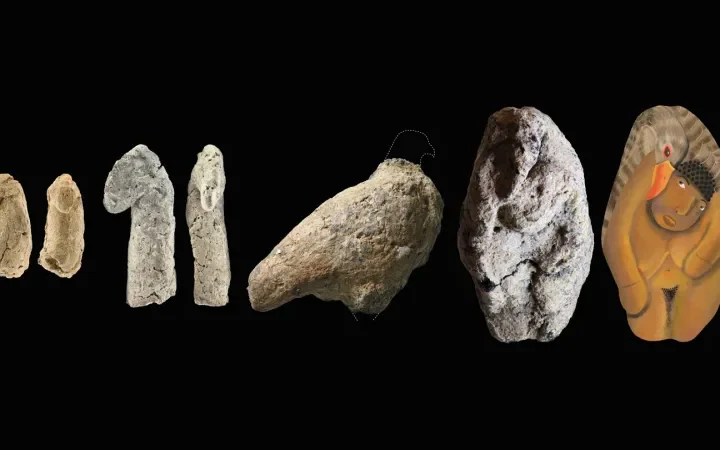 Stone Age children left fingerprints on ancient art projects
 This magic mushroom can kill
 Light is hard to block from every direction. This physicist found a way
 Science to restore speech is moving fast. Here’s what’s next
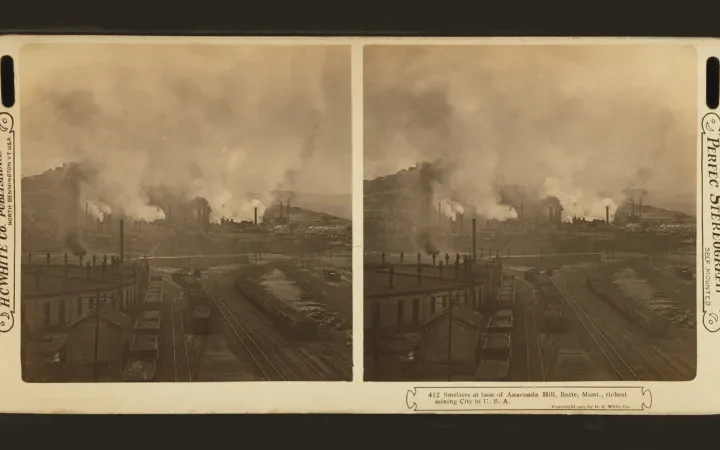 Toxic secrets are hiding in Arctic ice
 Fossil fuel emissions are down in 2026. Green energy isn’t the reason
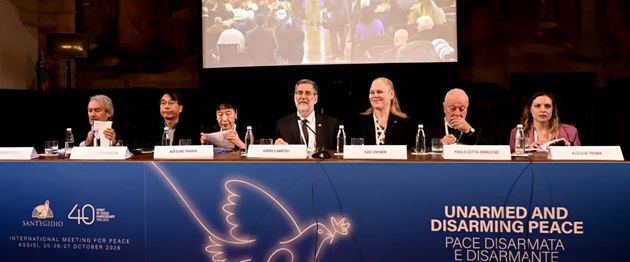 From Nuclear Weapons to Artificial Intelligence, a New Test of Humanity’s Restraint
 FRANCE: ‘The Government Should Learn to Respect Its People, Listen to Them and Consult Them’
 COP31: Why Africa Must Rethink Nuclear Energy