
LONDON: The new strain of the coronavirus disease (COVID-19) identified in the UK could be less infectious than first thought, according to researchers in Denmark.
Scientists from Copenhagen’s State Serum Institute found that the mutation is 36 percent more infectious than previous variants of the virus.
That is significantly lower than the 70 percent first cited by UK Prime Minister Boris Johnson, as well as the later estimation of 56 percent from London’s School of Hygiene and Tropical Medicine.
The researchers cautioned, however, that estimating infectiousness is a difficult science, and said that the true figure could be anywhere between 20 and 50 percent more infectious.
Tyra Grove Krause, head of department at the State Serum Institute, told Danish Radio: “In our calculations, we have found that the contact number for the British variant is 1.36 times higher than the other variants.”
However, she warned that the numbers are based on initial findings and so still remain somewhat uncertain.
“It’s a little lower than what we’ve heard from the UK,” she said. “Still, we have to approach it with caution, because these numbers are not set in stone. They may well change as we get more data.”
The new strain has caused significant concerns in the UK government and abroad.
It has been identified in 60 countries worldwide, and 380 Danes are known to have been infected with it.
The Danish government now estimates that up to 8 percent of new cases in the country are due to the new mutation.
Mutations are common in viruses, and many are insignificant. However, sometimes the changes to the viral code and result in them becoming more infectious, as was the case with this variant.
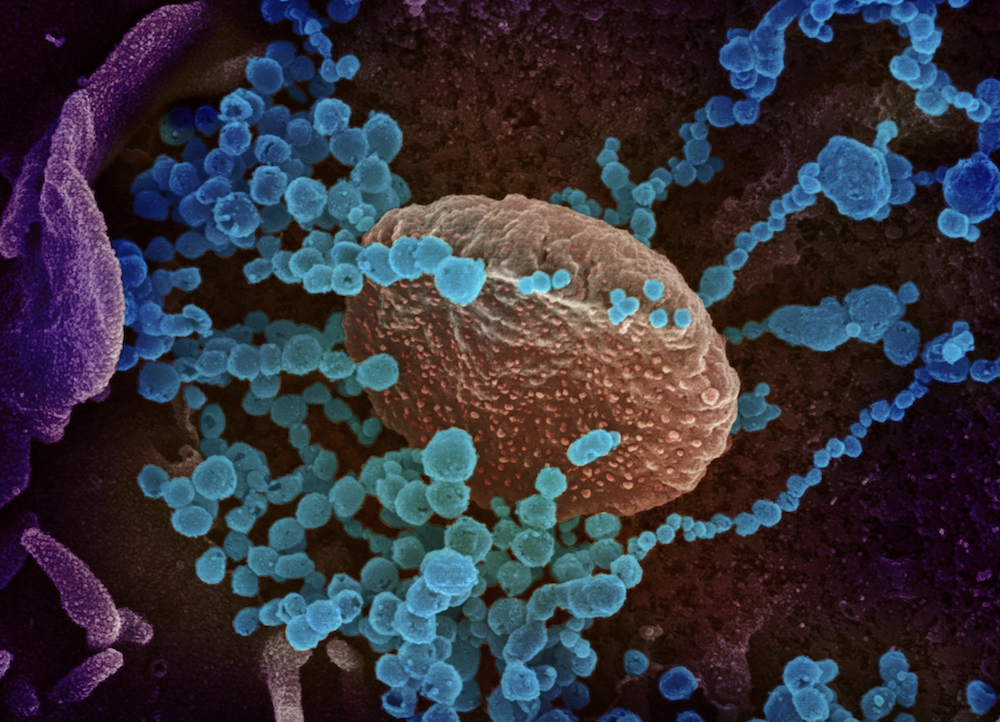
UK coronavirus strain detected in at least 60 countries: WHOGermany hits 2 million infections as WHO tackles new strainsFilipinos abroad cautioned on new strain of COVID-19Russia extends UK flight ban over new strain
 Meet Swiftiephylus, an Australian bug named after Taylor Swift
  ‘Bogland’ explores beautifully strange ecosystems
  Feeling nervous? Work the system
  These deep-sea spiders give off an otherworldly glow
  These neutrinos from the sun have the lowest energies ever seen
  A human set a new mathematical record. Then AI came for it
  Ukraine: Attacks on education threaten an entire generation, UNICEF warns
  Back to school in Haiti: ‘Madame, can you stop what the gangs are doing to us?’
  Ebola responders grapple with widening outbreak in DR Congo
  Escalating conflict drives new displacement in Yemen