
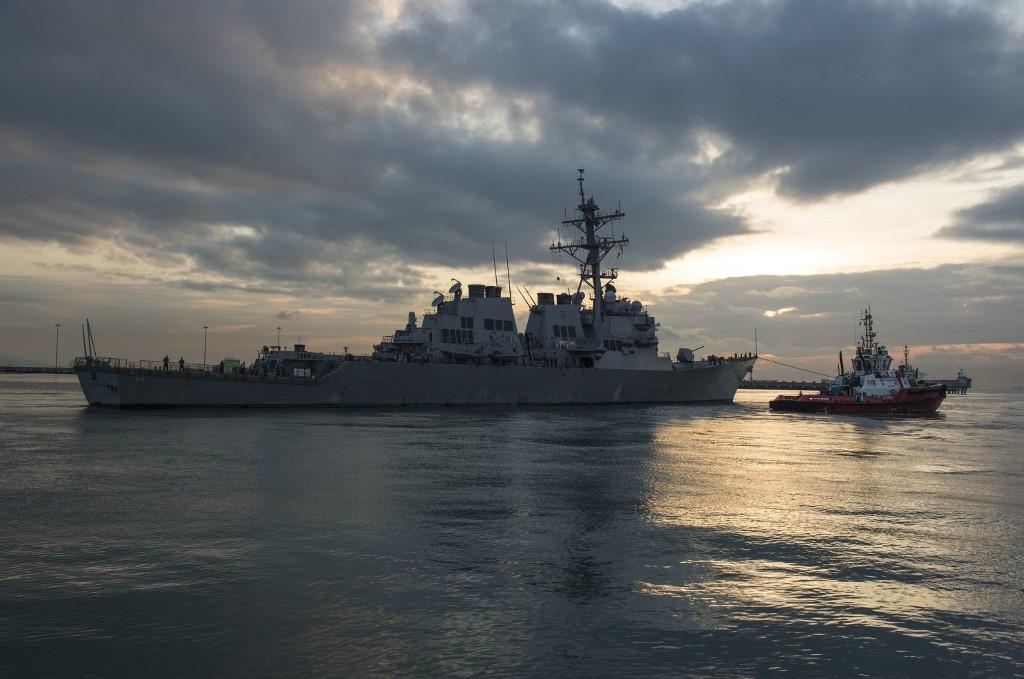
WASHINGTON: An American warship sailed through waters off the contested Spratly Islands in the South China Sea on Thursday, in the latest challenge to Beijing’s sweeping territorial claims in the region.
Guided-missile destroyer USS John S. McCain “asserted navigational rights and freedoms in the Spratly Islands,” the US Seventh fleet said in a statement.
“This freedom of navigation operation … upheld the rights, freedoms, and lawful uses of the sea recognized in international law by challenging restrictions on innocent passage imposed by China, Vietnam, and Taiwan,” it added.
China claims nearly all of the South China Sea, including the Spratly Islands, though Taiwan, the Philippines, Brunei, Malaysia and Vietnam all claim parts of it.
The region is believed to have valuable oil and gas deposits.
Further angering those countries, and the US, Beijing has moved aggressively to build reefs into artificial islands capable of hosting military planes.
The move came amid a rise in US-China tensions over the coronavirus epidemic, in which Washington has accused Beijing of hiding and downplaying the initial outbreak detected in the Chinese city of Wuhan late last year.
Relations between both countries have been strained on multiple levels since Donald Trump took office in 2017. A trade war launched by Trump has infuriated Beijing, as did his authorization of a $1.3 billion arms sale to Taiwan, which China considers a rebel province.

Chinese destroyer extremely close to American warship: USUS says China missile test in South China Sea ‘disturbing’
 A nanoparticle revealed the tiny impact of a single gas atom
  Was van Gogh’s ‘The Starry Night’ a flight of fancy or a real sky?
  This ‘living drug’ could change the course of autoimmune disease
  AI could turn scientific papers into research assistants
  A lifesaving medication is not behind the drop in U.S. overdose deaths
  Peek into hidden worlds revealed by the 2026 Nikon Small World contest
  World News in Brief: Russian attacks intensify, UN team tours West Bank, ‘unlawful’ elderly deaths
  Mothers get nearly eight times more paid leave than fathers – and women pay the price
 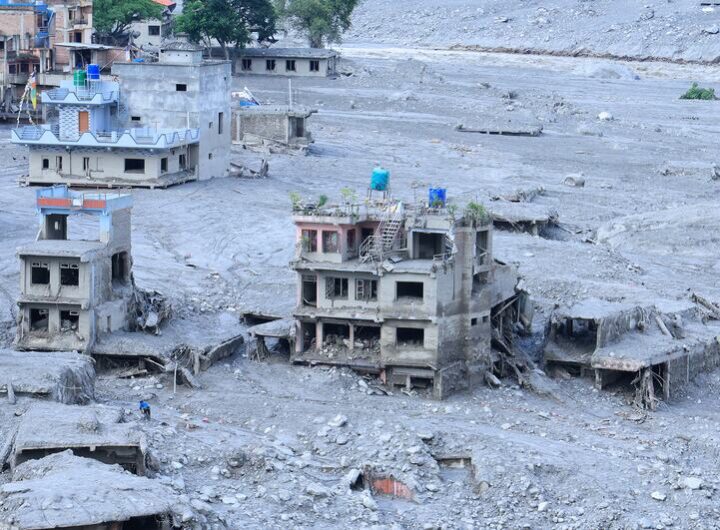 Nepal’s deadly glacier flood a ‘defining moment’ for the international community
  First human case of Shamonda virus reported in France as patient dies