

Wind turbines could offer a double whammy in the fight against climate change.
Besides harnessing wind to generate clean energy, turbines may help to funnel carbon dioxide to systems that pull the greenhouse gas out of the air (SN: 8/10/21). Researchers say their simulations show that wind turbines can drag dirty air from above a city or a smokestack into the turbines’ wakes. That boosts the amount of CO2 that makes it to machines that can remove it from the atmosphere. The researchers plan to describe their simulations and a wind tunnel test of a scaled-down system at a meeting of the American Physical Society’s Division of Fluid Dynamics in Indianapolis on November 21.
Addressing climate change will require dramatic reductions in the amount of carbon dioxide that humans put into the air — but that alone won’t be enough (SN: 3/10/22). One part of the solution could be direct air capture systems that remove some CO2 from the atmosphere (SN: 9/9/22).
But the large amounts of CO2 produced by factories, power plants and cities are often concentrated at heights that put it out of reach of machinery on the ground that can remove it. “We’re looking into the fluid dynamics benefits of utilizing the wake of the wind turbine to redirect higher concentrations” down to carbon capture systems, says mechanical engineer Clarice Nelson of Purdue University in West Lafayette, Ind.
As large, power-generating wind turbines rotate, they cause turbulence that pulls air down into the wakes behind them, says mechanical engineer Luciano Castillo, also of Purdue. It’s an effect that can concentrate carbon dioxide enough to make capture feasible, particularly near large cities like Chicago.
“The beauty is that [around Chicago], you have one of the best wind resources in the region, so you can use the wind turbine to take some of the dirty air in the city and capture it,” Castillo says. Wind turbines don’t require the cooling that nuclear and fossil fuel plants need. “So not only are you producing clean energy,” he says, “you are not using water.”
Running the capture systems from energy produced by the wind turbines can also address the financial burden that often goes along with removing CO2 from the air. “Even with tax credits and potentially selling the CO2, there’s a huge gap between the value that you can get from capturing it and the actual cost” that comes with powering capture with energy that comes from other sources, Nelson says. “Our method would be a no-cost added benefit” to wind turbine farms.
There are probably lots of factors that will impact CO2 transport by real-world turbines, including the interactions the turbine wakes have with water, plants and the ground, says Nicholas Hamilton, a mechanical engineer at the National Renewable Energy Laboratory in Golden, Colo., who was not involved with the new studies. “I’m interested to see how this group scaled their experiment for wind tunnel investigation.”
 Many American diets may not include enough of this essential nutrient
  A telling hole in a Neandertal bone hints at a bitter end
  Brain implants are helping people who’ve lost their voice
  Can math stay human in the age of AI?
  Tiny implants can use the body itself to talk to each other
 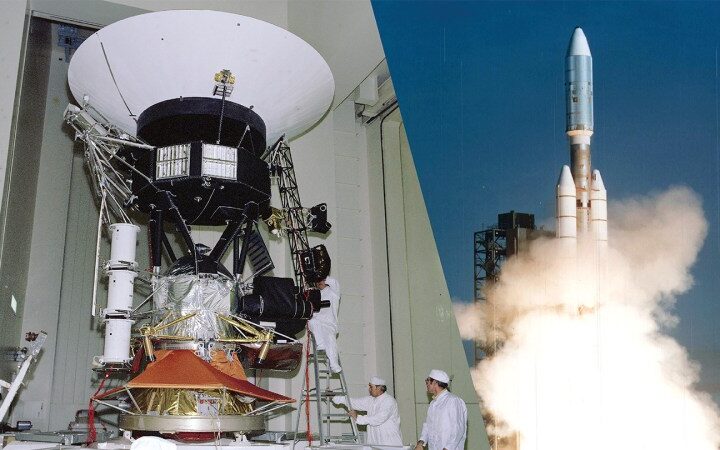 Voyager 1 is nearly one light-day from Earth. What’s out there?
  If the UN COP17 Is Serious About Biodiversity, It Needs to Follow the Money
  ‘Prioritize Social Inclusion as Rapid Transformations Risk Leaving Millions Behind’
  Finding Silver Linings Amid Haze of Climatic Uncertainty
  Could your brain data be used against you? UN calls for limits on neurotechnology