
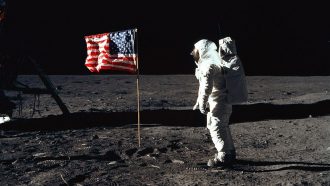
Lunar quarantine dropped — Science News, May 8, 1971
Spacecraft and men from Earth can contaminate space … with Earth-related material or organisms. But there is also a chance material returned from another celestial body could contain something harmful to the Earth…. Last week [NASA] announced it will [recommend] … that “further lunar missions need not be subject to quarantine” [because] … “there is no hazard to man, animal or plants” from anything brought back from the moon.
Update
The last U.S. lunar mission to come back to Earth, Apollo 17, didn’t have to quarantine upon return in 1972. But missions to the moon remained under strict protocols to prevent spacecraft from contaminating it. In 2020, NASA exempted most of the moon — minus areas of scientific interest and historic sites — from those rules (SN: 11/23/19, p. 10). For missions to other planets, though, strict anticontamination measures still apply. NASA has called for research of possible risks as it aims to land humans on Mars in the 2030s.
 Science to restore speech is moving fast. Here’s what’s next
 Toxic secrets are hiding in Arctic ice
 Fossil fuel emissions are down in 2026. Green energy isn’t the reason
 Drugs like Ozempic may help reverse chronic kidney disease
 A high-fiber diet may clear away plastic in the gut
 This may be the best evidence yet that dinosaur blood can fossilize
 Climate crisis could push 141 million more women into extreme poverty
 Sudan war: First suicide bombers, now long-range drone strikes are the norm
 When deaths go uncounted: WHO flags dangerous blind spots in Africa’s health data
 Security Council LIVE: South Sudan’s first elections loom amid rising violence