
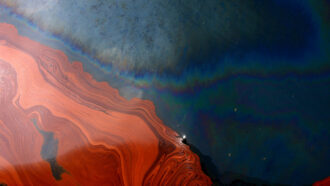
Oil on the waters — Science News, October 14, 1972
[In the late 1960s], about the best means of cleaning up oil was to put straw on it, then scoop up the oily straw by hand or with pitchforks. Now industry … has devised an arsenal of oil cleanup chemicals. Thin-layer chemicals can be used to herd oil together and to thicken it…. Chemicals are available as absorbents too. Still other chemicals … disperse oil throughout the water. Other chemicals show promise as oil-burning agents.
Update
Chemicals are the norm today, but the future of oil-cleanup technology may well be microbial. In recent years, researchers have shown that soil microbes broke down some of the oil from the 2010 Deepwater Horizon spill in the Gulf of Mexico (SN Online: 6/26/15). And electrical bacteria, which channel electricity through their threadlike bodies, could help by turning oil munchers’ waste into fuel for the microbes, scientists reported (SN: 7/16/22 & 7/30/22, p. 24). Microbial mops aren’t yet ready for prime time, so chemical dispersants, fire and spongelike sorbents remain key tools in cleanup kits.
 Artemis II results show how much science people can do at the moon
  Crossword: Time lines
  Many American diets may not include enough of this essential nutrient
 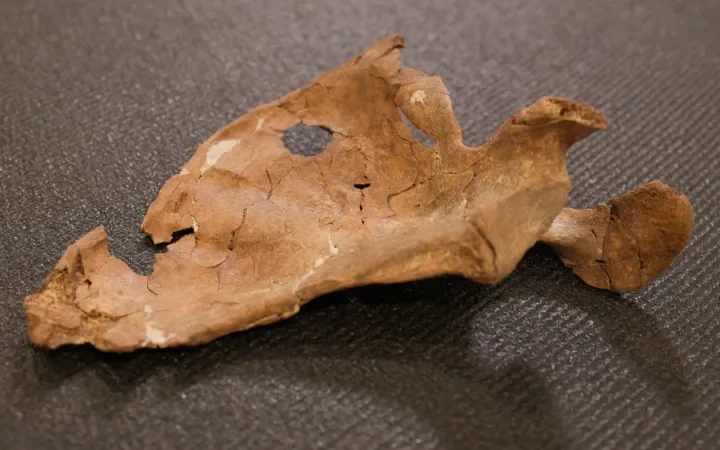 A telling hole in a Neandertal bone hints at a bitter end
  Brain implants are helping people who’ve lost their voice
  Can math stay human in the age of AI?
  Ebola Spread Raises Fresh Urgency for Africa’s Domestic Health Funding
  If the UN COP17 Is Serious About Biodiversity, It Needs to Follow the Money