
Earthquakes have rocked the planet for eons. Studying the quakes of old could help scientists better understand modern tremors, but tools to do such work are scarce.
Enter zircons. Researchers used the gemstones to home in on the temperatures reached within a fault during earthquakes millions of years ago. The method offers insights into the intensity of long-ago quakes, and could improve understanding of how today’s tremors release energy, the researchers report in the April Geochemistry, Geophysics, Geosystems.
“The more we understand about the past, the more we can understand what might happen in the future,” says Emma Armstrong, a thermochronologist at Utah State University in Logan.
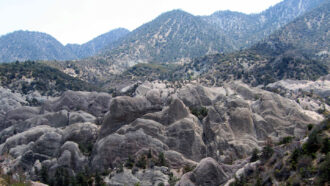
Armstrong and colleagues focused on California’s Punchbowl Fault. That now-quiet portion of the larger San Andreas Fault was probably active between 1 million to 10 million years ago, Armstrong says.
Heat from friction is generated in a fault when it slips and triggers an earthquake. Previous analyses of preserved organic material suggested that temperatures within the Punchbowl Fault peaked between 465° Celsius and 1065° C. The researchers suspected that zircons in rocks from the fault could narrow that broad window.
Zircons often contain the radioactive chemical elements uranium and thorium, which decay to helium at a predictable rate (SN: 5/2/22). That helium then builds up in the crystals. But when a zircon is heated past a temperature threshold — the magnitude of which depends on the zircon’s composition — the accumulated helium escapes.
Measuring the amounts of the three elements in zircons from the fault suggests that the most intense earthquake generated temperatures lower than 800° C. That roughly halves the range previously reported. The finding provides clues to the amount of heat released by quakes, something difficult to measure for modern tremors because they often occur at great depths.
Armstrong plans to continue studying zircons, in the hopes of finding more ways to exploit them for details about ancient quakes.
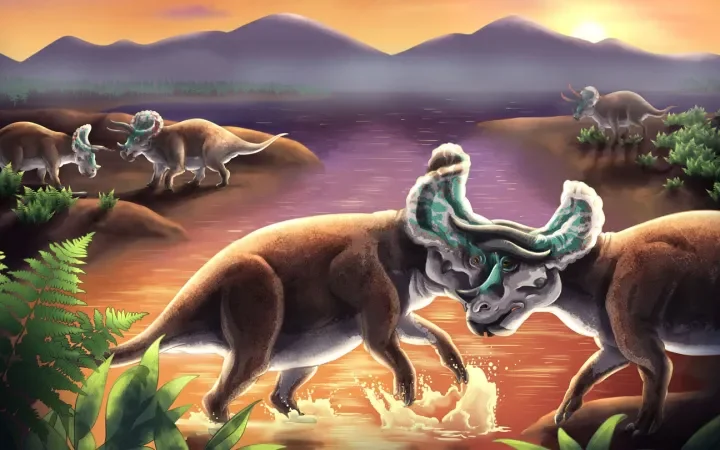 Horned dinosaurs’ weapons evolved to handle the forces of combat
 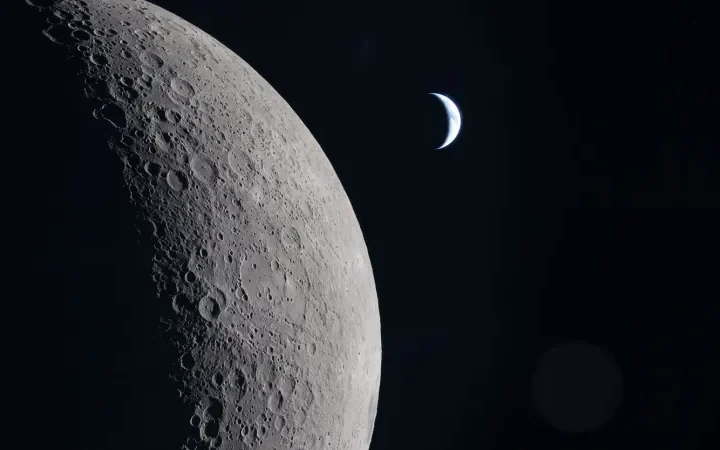 Artemis II results show how much science people can do at the moon
  Crossword: Time lines
  Many American diets may not include enough of this essential nutrient
  A telling hole in a Neandertal bone hints at a bitter end
  Brain implants are helping people who’ve lost their voice
  COP17: The world has a plan to save nature. Is it working?
  Flour sacks turned flood barriers: Gaza faces another winter without safe shelter
  WHO scales up Ebola readiness in 22 countries across three continents
  Ukraine: Civilian casualty rates among ‘deadliest’ in years, as energy attacks intensify