
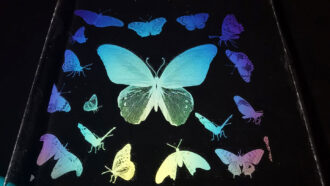
You’ve heard of disappearing ink. Now get ready for suddenly appearing ink. Using a clear liquid, researchers can print a full rainbow of colors on transparent surfaces. The trick is printing the liquid in precise, microscale patterns that create structural color.
Structural colors arise from the way different wavelengths of light bounce off microscopic imperfections on surfaces (SN: 8/17/21; SN: 6/1/16). “In nature, there are many beautiful structure colors, such as the wings of butterflies, the feathers of peacocks, the skin of chameleons and so on,” says Yanlin Song, a materials chemist at the Chinese Academy of Sciences in Beijing.
Song and colleagues printed structural colors on transparent silicone sheets using an ordinary ink-jet printer and clear polymer ink. The printer studded the silicone sheets with millions of microscopic ink domes, each of which served as a single pixel in the resulting image. Adjusting the size of a microdome changed the wavelengths of light that the dome reflected and therefore its color (SN: 3/8/19). Increasing the width of a single dome from 6.6 to 11 micrometers shifted its hue along the spectrum from blue to red and back again, the researchers report online September 22 in Science Advances.
The denser the domes were packed, the brighter the image. And printing a medley of differently colored ink pixels across a single area created blended shades, such as brown and gray. Using the technique, Song’s team printed multicolor, photorealistic portraits of Isaac Newton, Marilyn Monroe and other famous figures.
“I was excited to see that somebody had used [structural color] for this purpose,” says Lauren Zarzar, a materials chemist at Penn State who has studied similar structural colors cast by water and oil droplets. “They had some nice examples that I think illustrated the versatility of this mechanism.”
Zarzar imagines using structural colors to create complex optical signatures for anti-counterfeiting features on ID cards or currency. Such shimmery, colorfast hues could also make useful materials for cosmetics, clothing or architecture, she says.
 AI can give you your voice back
  These tiny snakes cartwheel to escape danger
 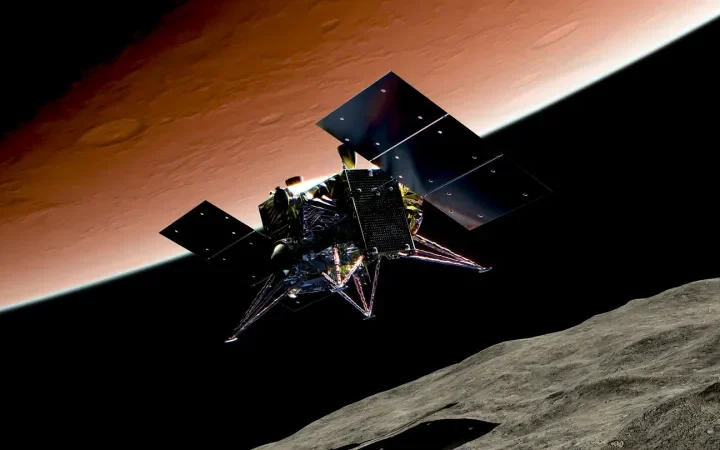 Japan’s sample return mission to Phobos may also collect some Mars dust
 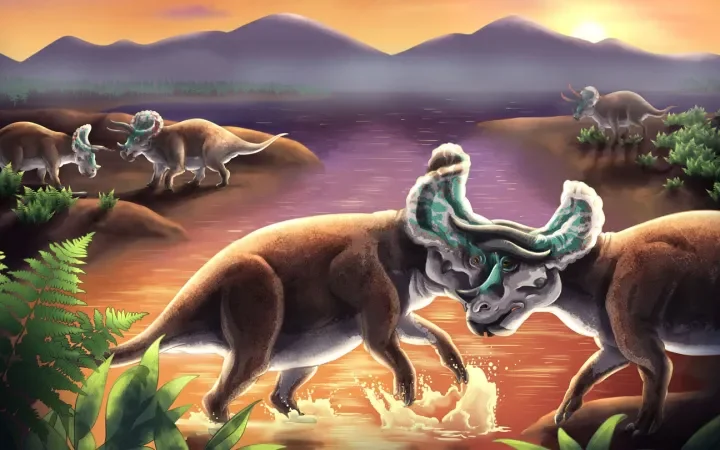 Horned dinosaurs’ weapons evolved to handle the forces of combat
 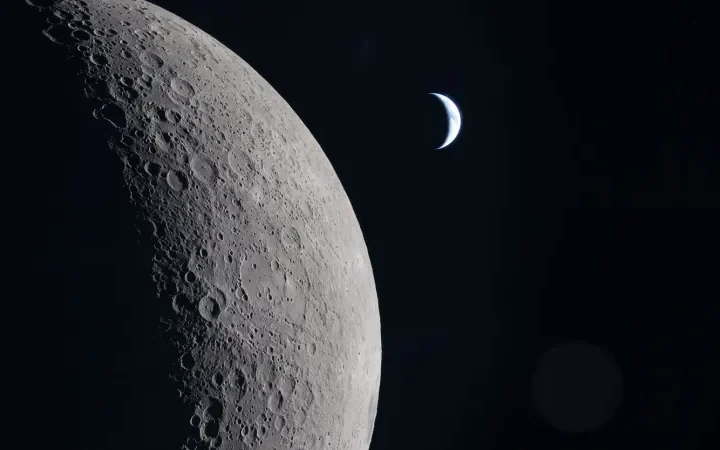 Artemis II results show how much science people can do at the moon
  Crossword: Time lines
  As El Niño Returns, East Africa’s Urban Poor Brace for Heavy Rains
  Hunger is ‘an avoidable tragedy’ in a world of plenty: Türk
  UN condemns deadly wave of drone strikes in war-torn Sudan